

There was a time in my life when Romans 8:28 felt more confusing than comforting.
Six months after I got married, I found out I was pregnant. Like many couples, my husband and I were filled with excitement at the thought of welcoming our first child. At the time, I was working in a private laboratory, going about my daily routine while quietly carrying this new life.
But just six weeks into the pregnancy, everything changed.
I experienced a miscarriage.
To this day, I can still remember the weight of that moment; the shock, the grief, and the questions that came rushing in all at once. It was, without a doubt, one of the most painful seasons of my life.
I blamed myself.
I blamed my husband.
And if I’m being completely honest, I questioned God.
Well-meaning friends, my sisters in the Lord, reminded me that God had a plan, that He would bring something good out of this. And while I knew those words were rooted in truth, they didn’t take away the pain. They didn’t answer the “why.”
For a long time, I wrestled with that loss.
We continued trying for a baby for the next year and a half. We sought medical help. We prayed together every night. And yet, it often felt like heaven was silent.
It took more than two years for me to truly begin healing from that experience.
Looking back now, I can see that God was working in ways I didn’t understand at the time. But in that season, all I could see was what had been taken from me, not what God was doing behind the scenes.
And maybe you know that feeling too.
Maybe you’re holding onto a promise like Romans 8:28, but deep down, you’re wondering how it could possibly be true in your situation.
Romans 8:28 promises that God works in all things for good; not that everything is good, but that He is shaping us into the image of Christ. Even in seasons of loss, unanswered prayers, or suffering, God’s purposes are at work. Trust Him, anchor in Scripture, and remember His faithfulness. He is near, present, and always at work.
What Does Romans 8:28 Not Mean? (Clearing Common Misunderstandings)
Before we hold onto this promise, we need to understand what it does not mean.
Romans 8:28 does not say that everything that happens is good.
Loss is not good.
Grief is not good.
Sin and suffering were never part of God’s original design.
When we rush to label painful experiences as “good,” we can unintentionally minimize real hurt—both our own and someone else’s.
This verse also does not mean that God causes evil or delights in suffering. Scripture consistently reveals a God who is compassionate, near to the brokenhearted, and deeply aware of our pain. (See Psalm 103:13; Psalm 34:18; Psalm 56:8)
And it certainly does not mean life will turn out the way we hoped.
The context of Romans 8 speaks of groaning, waiting, and longing for redemption. This promise was never meant for easy seasons. It was written for moments when faith is tested.
What Does Romans 8:28 Really Mean? God’s Purpose in Every Season
What this verse does give us is a deeper, steadier hope:
God is actively working in all things, even the painful and confusing ones, for a greater purpose.
Notice the wording carefully.
It does not say all things are good.
It says God works in all things for good.
That means nothing in your life is wasted.
Not your loss.
Not your waiting.
Not even the questions you’ve wrestled with in the quiet moments.
God is not distant. He is not passive. He is not absent from your story.
He is working faithfully, patiently, and often invisibly.
And this promise is for those who love Him and are called according to His purpose. It is a reminder that your life is not random. It is held within the care of a sovereign and loving God.
What Is the “Good” in Romans 8:28? (Romans 8:29 Explained)
To understand this promise fully, we have to keep reading.
The “good” in verse 28 is defined in verse 29:
“For those God foreknew He also predestined to be conformed to the image of His Son…”
God’s definition of good is not centered on comfort or ease.
It is centered on transformation.
He is shaping you to become more like Christ:
- in your character
- in your faith
- in your trust
- in your dependence on Him
That doesn’t make the pain less real. But it gives the pain a purpose.
Even the hardest seasons can become places where:
- faith is deepened
- pride is softened
- trust is refined
God’s plan is not just to change your situation. It is to change you gently, faithfully, and with eternal purpose.
Trusting God When You Can’t See the Good

This is where many of us struggle the most.
It’s one thing to say “God is working” when you can look back and see His hand. It’s another thing entirely when you are still in the middle of the pain.
When the prayer hasn’t been answered.
When the loss is still fresh.
When the silence feels overwhelming.
And this is also where we need wisdom in how we apply this truth to others.
Should You Share Romans 8:28 with Someone Who Is Grieving?
One question I’m often asked is:
Should we quote Romans 8:28–29 to someone who has just lost a loved one?
The truth is, timing and tenderness matter.
While this promise is true, it is not always what a grieving heart needs to hear in the immediate moment.
In the early stages of grief, people don’t need explanations.
They need presence.
They need someone who will sit with them, listen, weep with them, and remind them, through quiet love, that they are not alone.
There will be time later to gently point them to the truth. But in the moment of deep sorrow, quoting Romans 8:28 too quickly can feel less like comfort and more like dismissal of their pain.
Even Scripture shows us this balance.
We are called to speak truth, but also to “weep with those who weep” (Romans 12:15).
There is a time to hold onto this promise personally.
And there is a time to simply reflect the compassion of Christ to others.
If you are the one walking through grief, know this:
You don’t have to rush to “see the good.”
God is not asking you to have everything figured out. He is inviting you to trust Him, one step at a time.
How to Trust God in Difficult Times (Even When It Hurts)
There will be days when trusting God feels difficult.
Days when your emotions are heavy.
Days when your questions feel unanswered.
But the truth is not dependent on feelings.
God’s goodness does not change based on your circumstances.
His purposes do not fail because you cannot see them.
Trusting Him doesn’t mean pretending everything is okay.
It means bringing your honest pain before Him. It’s choosing to believe that He is still good, still present, and still at work.
Practical Ways to Hold onto This Promise
Here are a few gentle ways to anchor your heart in this truth:
1️⃣ Bring Your Pain to God Honestly
You don’t need polished prayers. God already knows your heart.
2️⃣ Surrender the Outcome
Trusting God means releasing the need to control how things unfold.
4️⃣ Remember His Faithfulness
Look back on your life and take note of where God has sustained you.
5️⃣ Stay Rooted in Scripture
Let God’s Word steady you when your emotions feel uncertain.
God Is Still Good: Holding onto His Purpose in Pain
One of the hardest truths to hold onto is this:
God can be good, even when life is not.
His goodness is not proven by an easy life.
It is revealed through His presence, His faithfulness, and His unchanging character.
Looking back on my own journey, I can now see that God was not absent in my pain.
He was present.
He was patient with me.
He was working quietly, steadily, and with purpose.
And the same is true for you.
You may not see it yet.
You may not understand it fully.
But God is still writing your story.
Key Takeaways: Romans 8:28–29 Explained Simply
- Romans 8:28 does not mean everything that happens is good
- God works through all things for His purpose
- The “good” in this promise is becoming more like Christ (verse 29)
- God’s timing and ways are often beyond our understanding
- In moments of grief, presence matters more than quick explanations
- You can trust God’s goodness, even when life feels uncertain
Frequently Asked Questions About Romans 8:28
What does Romans 8:28 mean?
Romans 8:28 means that God works in all things for the good of those who love Him. The “good” is not always comfort or ease, but being conformed to the image of Christ (verse 29).
Does Romans 8:28 mean all things are good?
No. Romans 8:28 does not mean that all circumstances are good. It means that God works through all things, including suffering and loss, for His purposes.
How can I trust God when life is painful?
Trusting God in difficult times involves surrendering outcomes, bringing your honest pain to Him, anchoring yourself in Scripture, and remembering His faithfulness in past seasons.
Is it appropriate to quote Romans 8:28 to someone who is grieving?
Timing and tenderness matter. In the early stages of grief, presence and compassion are more important than immediately quoting Scripture. Later, gently pointing to this truth can encourage hope and trust.
What is the “good” God works toward in Romans 8:28?
The “good” refers to spiritual growth and being conformed to the image of Christ. God’s purpose is to shape our character, faith, and dependence on Him.
Closing Prayer: Trusting God in the Middle of Uncertainty
Lord,
Thank You for being near in every season, even in pain and confusion.
Help me to trust You when I cannot see what You are doing.
Remind me that You are still good, still faithful, and still at work.
Shape my heart to reflect Christ, even through difficult moments.
Teach me to rest in Your promises and walk by faith each day.
Amen.
A Gentle Invitation to Trust God with Your Story
If you’re walking through a painful or confusing season, you are not alone.
Take a moment today to come before God honestly. He is not distant from your pain; He is near, and He cares deeply for you.
And if this devotional spoke to your heart, I invite you to explore more Scripture-based encouragement here on the site.
My prayer is that you will continue to find truth, hope, and strength in God’s Word, right where you are.
This post contains affiliate links, which means I may earn a commission at no extra cost to you if you make a purchase through one of these links. I only recommend products or services I trust and personally use. Thank you for supporting Biblical Christianity!
Recommended Resource
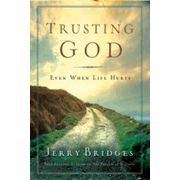
If you’d like a deeper, practical guide for walking with God through pain and uncertainty, I highly recommend Trusting God: Even When Life Hurts by Jerry Bridges. It helped me see God’s hand in seasons I didn’t understand.
|
Trusting God: Even When Life Hurts
By Jerry Bridges In seasons of pain, unanswered prayers, and uncertainty, this powerful book offers biblical encouragement for learning to trust God’s sovereignty. Jerry Bridges gently walks readers through difficult questions about suffering and God’s goodness. Rooted in Scripture, this resource helps you grow in faith, surrender outcomes to God, and rest in His purpose—even when life doesn’t make sense. |
Such good lesson! We all need to hear.
Indeed, it’s a common experience for all of us to face various trials and challenges in life. However, it brings a sense of reassurance to remember that God is always in control. He has a purposeful plan for each of us, and ultimately, everything will be resolved in a way that contributes to our greater good.
Thank you for taking the time to read and share your thoughts.
Thank you for this message; you have truly blessed my life today. My spirit is quickened, at least I know that God is with me, even with the mental and emotional pains I am going through now.
Hello Joseph,
I’m really glad to hear that this article resonated with you and uplifted your spirit. It’s true that even when we may not feel God’s presence, He is always with us, regardless of our circumstances.
We might think that things are going wrong, but it’s important to trust in God, as He works all things for our good.
Keep holding on, brother. God is always working behind the scenes.