
There have been Sundays when I was fully engaged in worship, singing with the congregation, heart lifted, and mind fixed on God. The worship team was unified; the atmosphere was reverent, and it felt as though the entire room was being drawn together into something sacred.
Then suddenly, without warning, the worship leader stopped mid-song to start another. The instruments shifted. The momentum broke. And just like that, the moment felt interrupted.
If you have ever experienced that, you know how jarring it can be. One moment, the congregation is actively entering into worship. The next, they are pulled out of it, not because the Spirit has moved differently, but because the transition itself disrupted the flow.
Sometimes it’s not even that obvious. It might be:
- An awkward stretch of silence
- A rambling or unfocused comment
- A sudden change in key or tempo
That’s why transitions matter.
Worship is not just a collection of songs. It is a spiritual journey. And how you move from one moment to the next can either sustain that journey or interrupt it.
“God is spirit, and his worshipers must worship in the Spirit and in truth.” — John 4:24
This article is for worship leaders, musicians, and anyone responsible for guiding a congregation into the presence of God. The goal is not polished performance, but Spirit-sensitive leadership.
Transitions shape the worship experience. They can sustain it or disrupt it. Plan your set with flow in mind, not just song quality. Use musical bridges to avoid dead air. Keep spoken transitions brief, clear, and purposeful, and use Scripture to anchor moments in truth. Pay attention to key and tempo changes so the flow remains natural and unbroken. Stay sensitive to both the room and the leading of the Spirit, and rehearse transitions just as intentionally as the songs themselves. Avoid common mistakes like rambling, abrupt stops, or unplanned silence. Above all, lead from the heart. Skill supports the Spirit, but it does not replace Him.
What Are Worship Transitions in a Worship Service?
A worship transition is any moment between elements in a service where something shifts. It might be:
- The space between two songs
- A spoken word before a prayer
- A key change
- Or a brief pause for reflection
Most people in the congregation never think about transitions. They only feel them, and that is exactly the point.
When transitions are smooth, the service feels unified. People are carried from one moment to the next without distraction.
But when transitions are clumsy or abrupt, engagement breaks. People disconnect. The atmosphere shifts.
“Let everything be done decently and in order.” — 1 Corinthians 14:40
Paul’s instruction was not about suppressing the Spirit. It was about stewarding the gathered moment well so every person present could truly encounter God. Good transitions are part of that stewardship. They are not just technical details. They are acts of pastoral care.
How to Plan a Worship Set for Better Flow

The best transitions begin long before Sunday morning. A well-planned set follows a natural movement:
- Songs of praise to gather the congregation
- Deeper worship to draw them in
- A moment of response where people are invited to receive, surrender, or simply be still
This progression is not a rigid formula, but it reflects an important pastoral reality: people often need to be gathered before they can be led deeper.
Why Theme Consistency Improves Worship Flow
One of the most overlooked elements of worship planning is unity in the message.
If the sermon is about grace, trust, or surrender, the songs should reinforce that. When the music, Scripture readings, and spoken word all carry the same thread, transitions become nearly invisible.
Every element points in the same direction, and the congregation never has to mentally switch gears.
How to Use Musical Transitions to Maintain Worship Flow
One of the most practical ways to improve worship transitions is by learning how to move between songs without unnecessarily breaking the atmosphere.
This can be done through simple but intentional musical choices, such as:
- Sustaining chords between songs
- Instrumental pads or keyboard layers
- Gentle drum or percussion builds
- Repeating a chorus or refrain while preparing the next song
- Brief instrumental interludes
These tools help preserve momentum and prevent the congregation from feeling abruptly disconnected.
How to Avoid Dead Air in Worship Transitions
Few things disrupt worship flow more quickly than awkward, unplanned silence. When music stops unexpectedly, and no clear direction follows, people often disengage almost immediately. Attention drifts. Minds wander.
Develop these habits:
- Stay in the same key between songs when possible
- Use a musical bridge when a key change is necessary
- Repeat a chorus or refrain while preparing the next song
- Give the band clear cues
The congregation should never sense that the musicians are figuring it out as they go.
How to Speak Between Worship Songs with Purpose

There are moments when the worship leader needs to speak, to pray aloud, share a brief thought, or invite the congregation into what is coming. These spoken transitions can be powerful. They can also be damaging if handled carelessly.
“Let your conversation be always full of grace, seasoned with salt, so that you may know how to answer everyone.” — Colossians 4:6
Resist the urge to fill silence with words. Know what you want to say before you say it. A single sentence that points people toward God is worth more than two minutes of wandering thought. Say what needs to be said, then let the music continue the conversation.
How to Use Scripture to Strengthen Worship Transitions
One of the most underused tools in worship leadership is Scripture.
A well-chosen verse, read quietly over soft instrumentation or spoken between two songs, can anchor a moment in a way that no musical skill can replicate. It reminds the congregation that worship is a response to God, not merely emotion. Learning more about incorporating Scripture into worship can help worship leaders further strengthen these moments.
“Let the message of Christ dwell among you richly as you teach and admonish one another with all wisdom through psalms, hymns, and songs from the Spirit.” — Colossians 3:16
You do not need to preach a sermon between songs. Keep a short list of transitional Scriptures in your planning notes so when the moment arrives, you are ready.
How to Handle Keys and Tempo in Worship Transitions
This is where spiritual sensitivity and technical preparation meet.
A worship leader may have a sincere heart, strong leadership, and a genuine desire to follow the Holy Spirit. But if the musical transitions themselves feel abrupt or disjointed, the congregation will notice immediately.
Before finalizing your worship set, evaluate the sequence of your songs musically, not just thematically.
Ask:
- Do these keys flow naturally?
- Will this shift feel smooth or jarring?
- Can we use a transition chord or modulation?
- Would reordering improve the overall experience?
For example, moving directly from a song in E major to one in B-flat may require intentional modulation or a musical bridge to avoid an abrupt transition.
In some cases, simply rearranging the song order can significantly improve worship flow.
Tempo deserves the same care. Sudden jumps from fast to slow can feel abrupt. Gradually slowing down the final chorus, using instrumental underscoring, or allowing a brief space before the next song can make the shift feel purposeful rather than accidental.
Technical preparation does not replace the Spirit. It removes distractions so you can lead well and stay present with the people in front of you.
Balancing Preparation and Flexibility in Worship Leading
Planning is not the same as rigidity. There is a real tension in worship leadership between preparing well and holding plans loosely. Learning to live in that tension is a mark of maturity.
“The wind blows wherever it pleases. You hear its sound, but you cannot tell where it comes from or where it is going. So, it is with everyone born of the Spirit.” — John 3:8
No matter how thoughtfully a set is planned, there are moments when the congregation’s response, or the Spirit’s leading, may call for adjustment.
Sometimes:
- A song needs to continue longer than planned
- A spontaneous prayer becomes necessary
- A moment of stillness should not be rushed
- A planned transition would interrupt what God is already doing
In these situations, technical excellence alone is not enough. Worship leaders must cultivate spiritual attentiveness.
Pay attention to the room. Notice whether people are engaged, whether there is stillness worth honoring, or whether the congregation needs encouragement or a moment of quiet reflection.
Being Spirit-led does not mean being unprepared. It means being willing to adjust. Strong worship leadership holds preparation and flexibility together, not as opposites, but as partners.
How to Rehearse Worship Transitions as a Team
Many worship teams rehearse their songs thoroughly and their transitions hardly at all, assuming the moments between songs will take care of themselves. They rarely do.
Run through the entire set, from beginning to end, without stopping, including:
- Musical transitions
- Speaking moments
- Scripture readings
- Planned silence
When the team has walked through those moments together, Sunday morning feels like a conversation the band already knows how to have, not an improvisation.
Rehearsal also creates space for feedback and, more importantly, for the team to pray together and align in heart posture. Skill without heart produces performance. A heart without skill can produce chaos. Rehearsal is where both come together.
Common Worship Transition Mistakes to Avoid
Even experienced worship leaders fall into patterns that undermine the flow of worship.
Here are the ones that appear most often.
Stopping Mid-Song or Changing Direction Abruptly
This is perhaps the most disorienting thing a worship leader can do.
Many worshipers have experienced this firsthand: the room is unified, people are deeply worshiping, and momentum is building, only for the leader to suddenly stop and pivot elsewhere.
This can immediately break spiritual focus.
While there are moments when changing direction may genuinely be necessary, abrupt interruptions should be approached with caution. If the congregation is sincerely engaged, that moment may already be accomplishing what worship leadership is meant to facilitate.
Pastoral wisdom: If God is clearly moving in a moment, be careful not to interrupt unnecessarily.
Unplanned Silence
A pause can be holy. Dead air is just absent. The difference is intention. If silence arises because the band is unsure what to do, fill it quickly with music, a word, or a prayer, and do the planning work that prevents it next time.
Over-Talking Between Songs
Words are powerful in worship. Too many are exhausting. If you have been talking for more than thirty seconds and have not yet said anything specific, stop. Take a breath. Let the music lead.
Poor Set Planning
Awkward transitions in the moment are usually symptoms of planning that did not consider flow. If you are consistently struggling with transitions, look upstream. The problem is likely in the set list, not the execution.
Example of Smooth Worship Flow from Start to Finish
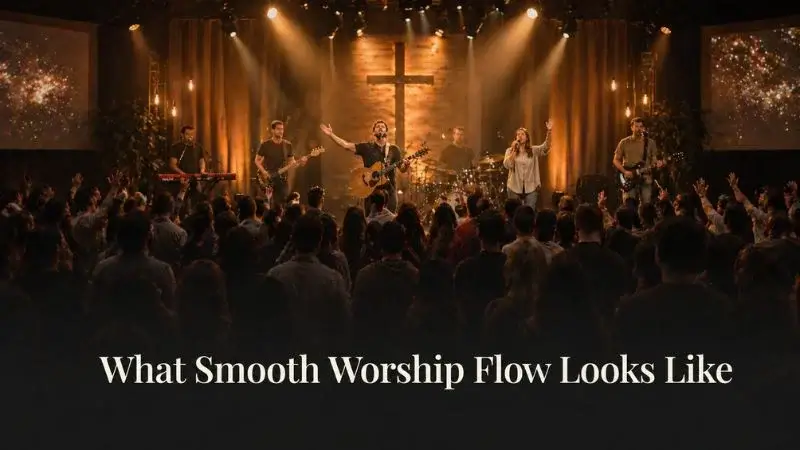
What does intentional worship flow actually look like in practice?
Imagine a worship set designed with thoughtful progression from beginning to end.
Stage 1: Gathering Through Praise
The service opens with an energetic, corporate song of praise. The congregation is invited to engage, hearts are lifted, and attention is redirected toward God.
As the song concludes, the band sustains instrumental support rather than stopping abruptly. The tempo gently eases, signaling a transition.
Stage 2: Purposeful Spoken Guidance
Over soft instrumentation, the worship leader offers a brief, focused statement:
“We come before Him not because of what we have done, but because of who He is. Let’s continue to worship Him together.”
This spoken moment is short, purposeful, and spiritually centered.
Stage 3: Deeper Reflection
A second song begins, carrying the congregation from celebration into greater intimacy.
At its conclusion, rather than rushing ahead, the team creates space. Soft instrumentation continues while Scripture is read:
“Be still, and know that I am God.” — Psalm 46:10
This moment anchors the transition in truth.
Stage 4: Response and Surrender
From this stillness, the final song begins naturally, leading the congregation into surrender, prayer, and deeper worship.
No abrupt announcements. No unnecessary interruptions. Just thoughtful progression.
The Goal: Faithful Leadership
The objective is not flawless performance. It is faithful shepherding.
When transitions are thoughtfully planned, worship leaders help carry people through a meaningful spiritual journey, allowing each moment to build naturally on the one before it.
That is what smooth worship transitions are truly about.
Conclusion: Worship Is a Journey, Not a Performance
Worship is not a playlist. It is a pilgrimage. Every Sunday, people enter the room carrying burdens, distractions, and the weight of the week. In worship, they are invited to lay those things down and turn their hearts toward God. That is sacred work, and transitions play a quiet but powerful role in it.
Skill matters. Planning matters. Preparation matters. Learn your keys. Rehearse your transitions. Think intentionally about flow. But above all of it, guard your heart.
A perfectly executed set led from distraction or performance will always feel empty. Yet even imperfect transitions, when led by a worshiping heart, can gently carry people into God’s presence.
“Ascribe to the Lord the glory due his name; worship the Lord in the splendor of his holiness.” — Psalm 29:2
Lead with care. Lead with humility. And remember, the One you are leading people toward is faithful to meet them there.
For deeper growth in worship leadership, explore our guides on choosing worship songs wisely, incorporating Scripture into worship, and balancing heart and mind in worship.
Key Takeaways
- Worship transitions are pastoral moments, not technical gaps. Every shift between songs, words, or silence shapes how people engage with God.
- Flow is created through purposeful planning. Thoughtful set structure, theme alignment, and musical awareness remove distractions and support worship engagement.
- Preparation and sensitivity work together. Strong worship leaders plan well but remain flexible enough to follow the Spirit’s leading.
- What happens between songs matters deeply. Musical bridges, Scripture, silence, and spoken words are not fillers; they are part of worship itself.
- Heart posture is the foundation of effective worship leadership. Skill supports leadership, but a worshiping heart carries spiritual weight that technique alone cannot.
Frequently Asked Questions About Worship Transitions
How many songs should a worship set have?
There is no universal number. The ideal set length depends on your church’s context, service flow, and spiritual direction. What matters most is not quantity, but intentional flow. A short set with smooth transitions can be more impactful than a longer set without cohesion.
What should I do if the congregation is not engaging?
Resist the urge to push harder or get louder. Disengagement is often a signal to shift direction, not increase energy. A quiet spoken word, a moment of prayer, or a gentle instrumental pause can reset the atmosphere more effectively than turning up the volume.
Is it ever okay to change songs mid-service?
Yes, but it should be done with discernment. If you sense the Holy Spirit leading a shift, respond carefully. Avoid abrupt stops when possible. If the congregation is deeply engaged, be especially cautious not to interrupt what may already be a meaningful moment.
How long should spoken transitions be?
In most cases, keep them under 30 seconds. Clarity matters more than length. A single focused sentence that points people toward God is often more powerful than extended explanation.
What if our team has limited rehearsal time?
Prioritize transitions over repetition. Even one intentional run-through of the full set flow can dramatically improve confidence and cohesion on Sunday.
Can silence be used in worship transitions?
Yes, when it is intentional. Planned silence can create space for reflection and reverence. Unplanned silence, however, often creates confusion. The difference is clarity and leadership.
Should transitions be scripted or spontaneous?
Both have value. Plan what you intend to say or do, but hold it loosely. Preparation provides clarity; sensitivity allows room for the Spirit’s leading. Think of it as prepared readiness rather than rigid scripting.
Found this guide helpful? Share it with your worship team and ministry leaders.
As an Amazon affiliate, I may earn a commission at no extra cost to you if you make a purchase through one of these links. I only recommend products or services I trust and personally use. Thank you for supporting Biblical Christianity!
Recommended Resource for Worship Leaders
If you want to go deeper in creating smooth, intentional worship flow, this resource is a great next step. Worship Flow: 28 Ways to Create Great Segues gives practical ideas you can immediately apply to improve how your team moves from one moment to the next. It’s a helpful guide for worship leaders who want to build more connected, distraction-free, and Spirit-sensitive services.
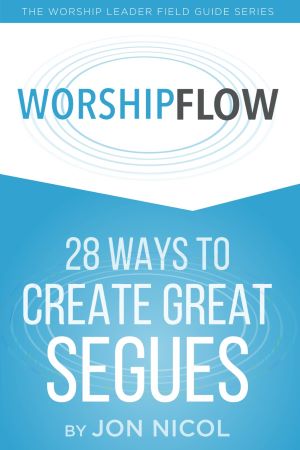
Worship Flow: 28 Ways to Create Great Segues
By Jon Nicol
This practical resource helps worship leaders think intentionally about transitions and flow between songs, prayers, and service elements. It offers simple, usable ideas for creating smoother segues so worship sets feel more connected, natural, and Spirit-led. A helpful guide for any team wanting to strengthen their worship service flow and avoid awkward or abrupt transitions.