

Many of us try to live faithfully.
We serve in our churches.
We manage responsibilities at home and at work.
Yet even when we do all the “right” things, a restless feeling can linger. A quiet discontent tugs at our hearts.
Often, we blame our circumstances. Sometimes we point to other people or even ourselves. But Scripture gently redirects our attention. Discontent is rarely just about what’s happening around us. It begins in the heart.
At its core, discontent whispers that what we have isn’t enough. It subtly questions whether God’s provision is sufficient for this season of life.
The good news is that God does not leave us in this restless state. He invites us into something better. Scripture teaches us that contentment and gratitude are not forced emotions, but heart postures shaped by faith and trust in Him.
“Biblical contentment is not about forcing ourselves to be thankful. It’s about allowing God to realign our hearts so gratitude flows naturally, even when circumstances don’t change.”
In this post, we’ll explore what Scripture says about biblical contentment and Christian gratitude. We’ll also look at practical, faith-filled ways to find joy in God and cultivate a thankful heart, one that endures in every season.
True contentment and gratitude are learned, not automatic. By trusting God in every season—through uncertainty, change, or unmet expectations—our hearts naturally grow thankful. Reflecting on His faithfulness, praying with gratitude, and guarding against comparison cultivate a life anchored in peace, joy, and trust in God.
Discontentment: The Quiet Companion of Misplaced Desires
Discontentment often begins quietly, like a shadow in the heart. It doesn’t always announce itself loudly. Instead, it whispers that what we have is never enough. Over time, it can lead us to compare ourselves to others, worry about the future, or pursue things that promise security but cannot truly satisfy.
Even as believers, we are not immune to this struggle. Discontent takes root when our hearts begin to expect fulfillment from sources God never intended to fully satisfy us.
Scripture warns us about this subtle drift. Jesus cautioned His listeners to guard their hearts carefully, reminding them that life is not measured by possessions or abundance (Luke 12:15). When our desire for more, whether money, recognition, comfort, or control, begins to shape our decisions, trust in God can quietly erode.

Biblical contentment, then, is not about having everything we want. It is about recognizing where true satisfaction comes from. Ecclesiastes 5:10 reminds us that loving wealth or continually chasing “more” never brings lasting fulfillment. Discontent keeps the heart striving, yet never truly at rest.
Even in seasons where our needs are met, restlessness can linger. That is why Scripture points us beyond circumstances and toward God’s presence. Hebrews 13:5 calls believers to be content not because life is predictable, but because God is faithful and unchanging. True contentment grows when our hearts learn to rest in Him.
“Discontent is often less about what we lack and more about where our trust is placed. When we look to people, positions, or possessions for security, our hearts can drift from God’s sufficiency.”
Reflection:
Take a moment to notice where restlessness shows up in your life. Ask yourself: Am I seeking security or satisfaction in something God never intended to fully provide?
Biblical Contentment Is Learned, Not Automatic
Contentment is not something we suddenly acquire. It is a posture of the heart that God teaches over time, often through seasons of uncertainty, change, and unmet expectations. As the apostle Paul explained, contentment is something learned, not assumed (Philippians 4:11–13).
I learned this lesson slowly.
Working overseas allowed me to earn a better income, and during that season, my husband and I were able to build our own home. When I began seriously considering returning home for good, I knew life would change, especially financially. At first, it felt manageable. It was just the two of us.
But when Zander came along, a quiet fear crept in. I began to worry whether we could truly provide everything he would need. That concern pushed me to apply for a government position at our local Rural Health Unit, believing the stability would finally give us peace of mind.
I didn’t get the job.
For a brief moment, I was tempted to question God’s direction. Yet instead of frustration, I sensed a gentle reassurance. That door was being closed on purpose.
Looking back, that season marked a turning point. Rather than striving to secure what felt “safe,” God redirected my heart. I revived this website after more than two years of neglect, not knowing exactly where it would lead, but trusting that obedience mattered more than certainty.

That was when I began to understand Paul’s words more deeply. Contentment did not come from financial security or clear plans. It came from trusting that God’s provision might look different—but would still be enough. As Scripture reminds us, our confidence rests not in what we have, but in God’s promise to never leave us nor forsake us (Hebrews 13:5).
“Contentment doesn’t come from circumstances lining up perfectly; it comes from a heart that trusts God’s sufficiency in every season.”
Gratitude Is the Fruit of a Realigned Heart, Not a Forced Discipline
Christian gratitude is more than a polite “thank you” or a daily checklist. True thankfulness springs from a heart that has been realigned to see God’s goodness and faithfulness. It is not forced; it is cultivated as we learn to trust Him fully.
Even in difficult seasons, a heart grounded in God can find reasons to give thanks. As 1 Thessalonians 5:18 reminds us:
“Give thanks in all circumstances; for this is God’s will for you in Christ Jesus.”
This verse does not suggest that gratitude is easy or always natural. It calls us to a posture of thanksgiving; a conscious choice to trust God, even when we cannot see the full picture. Gratitude becomes an act of faith, not just an emotional response.
A thankful heart also guards against comparison, entitlement, and anxiety. Focusing on God’s provision helps us stop measuring ourselves against others or longing for what we do not have. Psalm 103:2 encourages us:
“Praise the Lord, my soul, and forget not all his benefits.”
This gentle call invites us to notice God’s daily faithfulness: spiritual blessings, provision, relationships, and even challenges that shape our character. Gratitude does not ignore hardship; it acknowledges it while affirming God’s unwavering care.
Practical Reflection:
- Begin your day by recognizing one way God has been faithful, even in small things.
- When stress or dissatisfaction arises, pause and ask: What is God teaching me right now? What blessings might I be overlooking?
- Let gratitude shape your prayers, not replace honesty with God. Share your worries and fears, but continue trusting His care.
“Gratitude flows naturally from a heart aligned with God. It is the evidence of contentment learned through trust and obedience, not the starting point. When our focus is on Christ, thanksgiving becomes a lifestyle rather than a task.”
How Contentment Frees Us to Steward Well
Contentment does more than bring peace to the heart; it empowers faithful stewardship. When we are restless or discontent, our decisions are often driven by fear, comparison, or a need to prove ourselves. A heart rooted in God’s sufficiency, however, enables us to steward our time, talents, and opportunities with freedom and joy.
Paul’s example shows this clearly. When he learned to be content in all circumstances, he could serve faithfully without anxiety over lack or abundance (Philippians 4:11–13). Contentment shifts our focus from what we do not have to what God has placed before us.
Jesus also connects trust in God with faithful action:
“But seek first his kingdom and his righteousness, and all these things will be given to you as well” (Matthew 6:33, NIV).
A content heart frees us to pursue God’s kingdom without being enslaved to outcomes, rewards, or recognition. Stewardship becomes an act of faith, flowing naturally from trust, gratitude, and alignment with God’s will.
Practical Ways Contentment Shapes Stewardship:
- Decision-Making from Trust, Not Fear – Say yes or no based on God’s guidance, not personal gain.
- Serving with Joy, Not Obligation – Invest your gifts in work, ministry, or family with a cheerful heart.
- Generosity Without Hesitation – A heart satisfied in God is willing to give time, resources, or attention freely.
“When contentment and gratitude guide our hearts, stewardship becomes a natural overflow of faith, not a burdensome duty.”
Practical Heart Practices
Cultivating contentment and gratitude is less about following rules and more about nurturing postures of the heart. These practices help redirect our desires toward God and allow thankfulness to flow naturally.
1️⃣ Start Each Day With Awareness of God’s Faithfulness
Pause each morning to notice God’s provision: big or small (Psalm 103:2). Even acknowledging a single blessing: food, relationships, health, or provision, can shift perspective and train your heart to focus on what you have rather than what is missing.
2️⃣ Practice Gratitude in the Midst of Challenges
Gratitude does not ignore difficulties; it acknowledges God’s presence and guidance despite them (1 Thessalonians 5:18). When hardships arise, ask:
- What is God teaching me?
- How is He providing in this season?
Over time, this strengthens trust and softens the grip of worry or comparison.
3️⃣ Guard Against Comparison and Entitlement
Discontent grows when we measure ourselves against others (Ecclesiastes 5:10). Recognizing these moments allows contentment and genuine gratitude to flourish naturally.
4️⃣ Let Gratitude Shape Your Prayer Life
Include thanksgiving alongside requests in prayer (Philippians 4:6–7). Gratitude in prayer helps guard the heart and brings peace, even when circumstances remain challenging.
5️⃣ Reflect on Your Growth and God’s Faithfulness
Regularly recall past seasons where God provided, redirected, or taught you contentment. Reflection reinforces that His faithfulness is consistent, helping your heart trust Him more deeply over time.
These practices are not about forcing gratitude or pretending life is perfect. They are about aligning the heart with God so contentment and thankfulness flow naturally from trust, not obligation.
A Heart at Rest Produces a Life of Gratitude
Contentment and gratitude are not optional extras in the Christian life; they are the natural outcome of a heart aligned with God. When we learn to trust His provision, even in seasons of uncertainty or unmet expectations, our hearts are freed from restlessness and fear.
A content heart allows us to steward our time, talents, and opportunities faithfully. Gratitude flows naturally from this alignment, shaping our prayers, decisions, and the way we serve others. It transforms ordinary circumstances into opportunities to witness God’s faithfulness and joy.

As Philippians 4:11–13 reminds us, contentment is learned. It grows through experience, reflection, and trust. Hebrews 13:5 reassures us that God never abandons us, even when life doesn’t go as planned. And 1 Thessalonians 5:18 calls us to give thanks in all circumstances, not as a duty, but as the overflow of a heart resting in Him.
Take a moment today to reflect on where your heart seeks security outside of God. Ask Him to cultivate contentment within you. Look for ways to express gratitude, small or large, as an act of trust and obedience.
“When your heart is at rest in God, contentment and gratitude are not burdens; they are the evidence of a life truly anchored in Him.”
Key Takeaways
- Contentment is learned, not automatic. It grows over time as we trust God through changing circumstances (Philippians 4:11–13).
- Gratitude flows from a realigned heart, not forced discipline. True thankfulness arises when we recognize God’s faithfulness (1 Thessalonians 5:18).
- Discontent often stems from misplaced trust. Comparing ourselves or relying on earthly security can steal peace (Hebrews 13:5).
- Contentment empowers faithful stewardship. A heart at rest in God can serve, give, and make decisions from trust, not fear (Matthew 6:33).
- Practical practices cultivate contentment and gratitude. Daily reflection, prayer with thanksgiving, guarding against comparison, and remembering God’s faithfulness help the heart grow in joy and thankfulness.
This post contains affiliate links, which means I may earn a commission at no extra cost to you if you make a purchase through one of these links. I only recommend products or services I trust and personally use. Thank you for supporting Biblical Christianity!
Recommended Resource for Further Reading
|
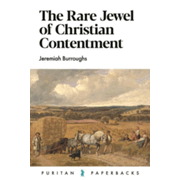
The Rare Jewel of Christian Contentment
By Jeremiah Burroughs A timeless Christian classic on learning true contentment in every season of life. Written during “sad and sinking times,” Burroughs’ pastoral wisdom points believers away from circumstances and toward a heart fully satisfied in God. Rooted deeply in Scripture, this book gently exposes the causes of discontent while guiding readers toward lasting peace, trust, and joy in God’s sufficiency. |