

When a Dream Feels Too Real to Ignore
You wake up, and it’s still fresh in your mind.
The dream felt different.
Clear.
Vivid.
Almost real.
Maybe someone was speaking to you.
Maybe you saw something symbolic.
Something important.
And for a moment, the question forms:
Was that from God?
You don’t want to ignore it.
But you also don’t want to assume something that isn’t true.
So, you do what many believers do today.
You start searching.
“What does this dream mean?”
“Is this a message from God?”
We are living in a time when spiritual experiences are openly shared.
Online.
In conversations.
Even in churches.
This growing hunger isn’t wrong.
God’s people want to hear from Him.
They want guidance and reassurance.
But alongside that hunger comes real danger.
Not every spiritual experience is from God.
Not every dream carries divine meaning.
And not every vivid encounter is meant to guide your life.
That is why we need something steady.
Something unchanging.
Something trustworthy.
We need the safety of Scripture.
This guide will walk you through how to discern spiritual experiences biblically, including dreams, visions, and impressions, using a clear and grounded framework that avoids fear on one side and sensationalism on the other.
Not every dream, vision, or impression is from God. Scripture is the ultimate authority. Experiences must align with His truth.
Three Biblical Filters:
1️⃣ Scriptural: Does it agree with the Bible?
2️⃣ Christ-centered: Does it point to Jesus and produce humility?
3️⃣ Community: Has it been tested by mature believers?
Practical Steps:
• Pause & pray for wisdom.
• Read Scripture first.
• Journal the experience honestly.
• Apply the three filters.
• Seek godly counsel.
• Let it go if there is no clear meaning.
Christ is sufficient. Rest in Him, stay rooted in Scripture, and grow in discernment with humility and patience.
Understanding Spiritual Experiences Through Scripture

The Bible does not deny spiritual experiences.
God used dreams and visions in redemptive history.
Joseph received dreams.
Daniel interpreted them.
Peter saw a vision that clarified God’s plan for the Gentiles.
These were real experiences.
And they came from God.
But Scripture is equally clear about something else.
Not every spiritual experience is divine.
Some arise from human imagination.
Some come from emotional intensity.
Some come from deception.
This is why Scripture never tells us to chase experiences.
Instead, it tells us to test them.
The strength of an experience is never the standard.
The Word of God is.
Learning how to evaluate spiritual experiences biblically begins here:
God’s truth does not bend to our experiences.
Our experiences must bend to God’s truth.
The Rule of Perfection: God’s First Test (Deuteronomy 13 & 18)
Long before the New Testament was written, God gave His people a clear framework for discernment.
In Deuteronomy 13, the Lord warned Israel about false prophets and dreamers.
Even if a sign or wonder came true, the message itself still had to be tested.
Why?
Because accuracy alone does not prove divine origin.
If an experience leads people away from the true God, it is false—no matter how convincing it feels.
Deuteronomy 18 adds another safeguard.
If a message does not come to pass, it did not come from God.
Together, these passages establish a vital principle:
God never contradicts Himself.
His character and truth are consistent.
An experience is not validated by how powerful it felt, how emotional it was, or how confident the messenger seemed.
It is validated by alignment with God’s revealed truth.
So, ask this foundational question:
Does this experience draw me closer to the God of Scripture?
Or does it pull my attention elsewhere?
If it contradicts God’s Word, it fails the first test.
The Three Filters of Biblical Discernment
Once you apply that foundational rule, Scripture gives us further clarity through a simple but strong framework.
Think of these as three filters.
Each one removes what does not belong.
1️⃣ The Scriptural (Textual) Filter
Everything must pass through the Bible.
Scripture is complete.
Sufficient.
Authoritative.
The Bereans in Acts 17 were called noble because they examined the Scriptures daily to test what they heard, even from the apostle Paul.
This matters deeply when learning how to discern messages in dreams or impressions.
Ask yourself:
- Does this experience agree with the whole counsel of Scripture?
- Does it contradict any clear teaching?
- Does it introduce a revelation Scripture does not support?
God will never give a private message that overturns His public Word.
If an experience contradicts Scripture, the process stops here.
Reject it.
2️⃣ The Christ-Centered (Christological) Filter
True spiritual experiences point to Christ.
Jesus taught that the Holy Spirit’s work is to glorify Him.
Not the experience.
Not the messenger.
Not the story.
So, ask:
Does this experience deepen my love for Christ?
Does it lead to humility, repentance, obedience, and worship?
Or does it elevate me as someone with special insight or authority?

Throughout Scripture, genuine encounters with God produce humility.
Isaiah fell undone.
John fell as though dead.
They did not build platforms from their experiences.
They surrendered to the God who revealed Himself.
This filter is essential when considering modern visions and their biblical meaning.
Any experience that centers attention on the person rather than Christ should be approached with caution.
3️⃣ The Community (Communal) Filter
Discernment was never meant to be done alone. God designed the church as a place of accountability, wisdom, and protection.
Scripture teaches that spiritual claims should be weighed by others.
There is safety in godly counsel.
This step is often neglected today.
Many people share spiritual experiences online before sharing them with their pastor.
They seek affirmation before discernment.
But Scripture calls us to bring these matters into the light.
Ask:
- Have I shared this with mature believers?
- Have I invited correction?
- Have I allowed others to test this with me?
This filter protects you from isolation and error.
Practical Steps for the Dreamer
So, what should you do if you experience a vivid dream, vision, or spiritual impression?
Here are clear, grounded steps you can follow.
1️⃣ Pause and Do Not Rush
Strong emotions can cloud judgment.
Urgency is often a warning sign.
God is not anxious.
He is patient.
Give yourself time.
2️⃣ Pray for Wisdom and Humility
Ask God for clarity.
Ask Him to guard your heart from pride or fear.
Seek truth, not excitement.
3️⃣ Open Scripture First
Do not start with social media.
Do not search for instant interpretations.
Go to the Word.
This matters deeply when wrestling with dreams as messages from God.
Scripture is always the starting point.
4️⃣ Write It Down Honestly
Record what happened without embellishing it.
This helps you reflect clearly and prevents meaning from being added later.
5️⃣ Apply the Biblical Filters
Test the experience with Scripture.
Examine whether it honors Christ.
Bring it into the community.
Be honest with what you find.
6️⃣ Be Willing to Let It Go
Not every dream has meaning.
Not every experience carries a message.
Sometimes it is simply a dream.
Learning how to discern spiritual experiences includes knowing when there is nothing to discern.
1️⃣ How can I discern if a dream is from God?
Test it against Scripture, ask whether it aligns with God’s character and the gospel, and seek guidance from mature believers. Experiences must point to Christ, not self.
2️⃣ Are all spiritual experiences messages from God?
No. Some arise from human imagination, emotions, or deception. Not every dream, vision, or impression carries divine meaning. Scripture is the final authority.
3️⃣ What are the three filters of biblical discernment?
Scriptural – aligns with the Bible; Christ-centered – points to Jesus and humility; Community – tested by mature believers.
4️⃣ Why is Scripture the final authority in evaluating experiences?
God’s Word is complete, sufficient, and authoritative. No private message, dream, or vision can contradict Scripture. Testing experiences ensures alignment with God’s truth.
5️⃣ What should I do if an experience seems meaningful but unclear?
Be patient, journal it, pray for clarity, and involve Scripture and godly counsel. Sometimes experiences have no immediate meaning. Discernment is a process.
Dreams as Messages from God: A Balanced View
The Bible shows that God can use dreams.
But it never teaches that all dreams are from Him.
This is where many believers struggle.
Some assume every vivid dream is divine.
Others dismiss all dreams completely.
Both extremes are unbiblical.
A balanced approach recognizes three truths:
- God can speak through dreams
- Not all dreams come from God
- Scripture remains the final authority
When considering dreams as messages from God, always return to the Word.
Balance protects your faith.
Modern Visions and Their Biblical Meaning
Today, claims of visions and encounters are common.
Some speak carefully.
Others speak with certainty and authority.
Scripture calls us to test all such claims.
God’s Word is complete.
It does not need a new revelation.
Modern visions must never add to Scripture.
They must never replace it.
They must never override it.
Learning how to interpret modern visions biblically requires humility, caution, and submission to God’s Word.
Truth is not measured by intensity.
It is measured by alignment with Scripture.
Why Discernment Matters Today

We live in an age of spiritual openness.
People are curious.
They are searching.
They are listening.
Without discernment, many are misled.
Experiences become authority.
Feelings replace truth.
This is why understanding spiritual experiences through Scripture matters so deeply.
Discernment protects your faith.
It keeps you anchored.
It guards your peace.
Conclusion: Resting in the Sufficiency of Christ
God is not silent.
He has spoken clearly and decisively through His Son.
While God once spoke in many ways, He has now spoken through Jesus.
This is our foundation.
We do not need constant new messages to know God.
We already have His Word.
Yes, God may work through experiences.
But He has already given us everything we need for life and godliness.
Do not chase experiences.
Do not build your faith on feelings.
Rest in Christ.
Remain rooted in Scripture.
That is where safety is found.
Scripture Index
Discernment & Authority of Scripture
- Deuteronomy 13:1–5
- Deuteronomy 18:20–22
- 2 Timothy 3:16–17
- Hebrews 1:1–2
Dreams & Visions
- Genesis 37:5–11
- Daniel 2:19–23; 4:19–27
- Acts 10:9–16; 10:28–35
- Numbers 12:6
- Job 33:14–18
- Jeremiah 23:25–32
Christ-Centered Discernment
- John 16:13–14
- 1 John 4:1–3
- Colossians 1:15–18
- Isaiah 6:1–5
- Revelation 1:17
Community & Wisdom
- Proverbs 11:14
- Proverbs 15:22
- 1 Corinthians 14:29
- Hebrews 13:17
Practical Guidance
- James 1:5
- Proverbs 3:5–6
- Ecclesiastes 5:2
Modern Claims & Cautions
- Jude 3
- Hebrews 1:1–2
- Revelation 22:18–19
- Matthew 24:24
- 2 Corinthians 11:13–15
- 2 Timothy 4:3–4
Sufficiency of Christ
- Romans 8:38–39
- Micah 6:8
- Matthew 28:18–20
- 2 Peter 1:3
Key Takeaways
- Not every spiritual experience is from God
- Scripture is the final authority
- Experiences must align with biblical truth
- Genuine encounters exalt Christ, not self
- Discernment requires community
- Not every dream has meaning
- Christ is sufficient
Gentle Encouragement
If you feel uncertain or confused, you are not alone.
Many believers are learning discernment in this area.
Stay anchored in God’s Word.
Stay focused on Christ.
Clarity grows where Scripture leads.
And as discernment grows, peace follows.
This post contains affiliate links, which means I may earn a commission at no extra cost to you if you make a purchase through one of these links. I only recommend products or services I trust and personally use. Thank you for supporting Biblical Christianity!
Recommended Resource
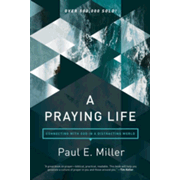
For those seeking to deepen their prayer life and grow in discernment, A Praying Life: Connecting with God in a Distracting World offers practical guidance rooted in Scripture.
Paul Miller and David Powlison walk readers through cultivating a focused, humble, and Christ-centered prayer life, helping you navigate spiritual experiences with wisdom and clarity.
|
A Praying Life: Connecting with God in a Distracting World – eBook
By Paul Miller & David Powlison Discover how to hear God’s voice and cultivate a prayer life that discerns His guidance. This book helps believers recognize divine direction while staying rooted in Scripture. Practical, Scripture-based guidance for evaluating spiritual experiences, dreams, and impressions with clarity, humility, and biblical discernment. |