

Over the years, I’ve learned that stewardship is about far more than budgeting, saving, or giving. It’s about the heart.
Money has a way of revealing what we truly trust, value, and prioritize. That’s why Jesus spoke about it so often. He knew that where our treasure is, our heart will follow (Matthew 6:21).
This isn’t a financial how-to or a checklist for “doing stewardship right.”
It’s an invitation to examine our hearts.
To trust God’s provision.
And to cultivate generosity that reflects His character.
When God Uses Finances to Test Our Trust
Few things test our faith like money does.
Unexpected expenses.
A prompting to give when resources feel tight.
A season where provision feels uncertain.
These moments can feel uncomfortable, even frustrating. However, they often reveal where our trust truly lies.
There was a season when our church needed financial resources to pioneer new churches in another part of the world. Our senior pastor asked every center to pledge a specific amount, which was then divided among the members of each congregation.
At first, many of us, including myself, began to murmur and question the request. We were already giving our tithes and monthly pledges to cover the rent for our worship building. And now this?

But as I prayed and reflected, God gently checked my heart. This wasn’t about pressure or obligation; it was about participating in His work. I realized that supporting the spread of the gospel was part of faithful stewardship. So, I gave my share, not because it felt easy, but because I trusted that God would continue to supply our daily needs. And He did.
Jesus reminds us, “Whoever can be trusted with very little can also be trusted with much” (Luke 16:10). Faithfulness often begins in the small, unseen choices.
Understanding God’s Provision in Finances
Trusting God with finances doesn’t come naturally.
Especially when bills pile up, or the future feels uncertain.
Yet Scripture consistently points us back to God’s care.
“So do not worry, saying, ‘What shall we eat?’ or ‘What shall we drink?’… Your heavenly Father knows that you need them” (Matthew 6:31–32).
God’s provision doesn’t always look like abundance by worldly standards.
Sometimes it looks like just enough.
Daily bread.
Strength for today.
Peace in uncertainty.
Paul reminds us that God “will supply every need… according to His riches in glory in Christ Jesus” (Philippians 4:19). That promise doesn’t eliminate responsibility, but it anchors us in trust.
Contentment grows when we focus on God’s faithfulness rather than what we lack.
Honoring God with Money as an Act of Worship
Stewardship is worship.
How we spend, save, and give reflects our heart posture before God. It reveals whether we see money as a tool for God’s purposes or as something we cling to for security.
“Honor the Lord with your wealth, with the firstfruits of all your crops” (Proverbs 3:9).
This verse isn’t about a formula. It’s about priority.

When we honor God first, whether through giving, generosity, or wise stewardship, we acknowledge that everything we have comes from Him. Even small, consistent acts of faithfulness can become meaningful expressions of worship.
Helping a neighbor.
Supporting ministry work.
Giving quietly without recognition.
These choices shape our hearts over time.
Financial Generosity in the Bible Reflects God’s Character
Generosity flows from who God is.
Scripture tells us that God gives freely and abundantly. When we give, we reflect His heart.
“Whoever sows sparingly will also reap sparingly, and whoever sows generously will also reap generously” (2 Corinthians 9:6).
This isn’t a transactional promise. It’s a heart principle.
Generosity expands our trust in God and loosens money’s grip on our hearts.
Proverbs 11:24 adds, “One person gives freely, yet gains even more; another withholds unduly, but comes to poverty.”
True generosity isn’t measured by amounts. It’s measured by obedience and trust.
How to Cultivate a Generous Heart Through Biblical Stewardship
Cultivating generosity starts internally before it ever shows externally.
Here are practical, biblical ways to grow a generous heart:
1️⃣ Trust God’s provision.
Giving can feel risky, especially when finances feel tight. Ask yourself: Do I trust God enough to step forward in obedience? Even small acts of trust can strengthen faith over time (Philippians 4:19).
2️⃣ Practice gratitude daily.
Gratitude shifts focus from what’s missing to what God has already provided. Consider starting or ending each day by thanking God for specific blessings, even simple ones.
3️⃣ See resources as entrusted, not owned.
Everything we have: money, time, skills, comes from God. Viewing resources as entrusted to us changes how we steward them. We move from control to responsibility.
4️⃣ Take small, faithful steps.
Generosity doesn’t always look dramatic. A modest gift, a consistent habit, or a quiet act of kindness reflects a surrendered heart.
5️⃣ Keep an eternal perspective.
Jesus reminds us that earthly wealth fades, but kingdom investments last forever. When we view stewardship through eternity, generosity becomes purposeful rather than burdensome.
Real-Life Scenarios of Generous Stewardship

Sometimes biblical principles feel abstract until we see them lived out.
A family chooses to give even while rebuilding financially, trusting God for daily provision.
A believer helps someone unexpectedly, even though it disrupts their budget.
A household aligns spending with values, choosing generosity over excess.
These moments don’t always feel comfortable. But they deepen trust and cultivate hearts that reflect God’s generosity.
As Jesus said, “It is more blessed to give than to receive” (Acts 20:35).
Key Takeaway: Stewardship Is About Alignment, Not Amounts
God isn’t after our money.
He’s after our hearts.
Generosity flows naturally from trust and surrender, not guilt or pressure.
When our hearts align with God, every financial decision becomes an opportunity to worship Him.
Daily stewardship shapes us.
It teaches dependence.
It nurtures gratitude.
It reflects God’s generous heart to the world.
FAQs On Stewardship and Generosity
Is generosity only about money?
No. Generosity includes time, talents, encouragement, and opportunities. Money is just one visible expression.
How can I trust God financially when things feel uncertain?
Focus on daily dependence, prayer, and gratitude. God’s faithfulness is often revealed one step at a time.
Does the Bible teach a specific amount Christians must give?
Scripture emphasizes cheerful, willing giving rather than a rigid formula. God looks at the heart behind the gift.
Conclusion: Living Out Faithful Stewardship Daily
Stewardship is a daily practice of heart alignment.
Every decision.
Every act of obedience.
Every small step of generosity.
When we trust God with what we have, He shapes our hearts to reflect His own. Start where you are. Be faithful in small things. And allow generosity to grow naturally as trust deepens.
Call to Action
If this post encouraged you, take a quiet moment today to ask God where He’s inviting you to trust Him more—whether with finances, time, or opportunities.
Then take one small, faithful step in obedience. Over time, those steps shape a heart that reflects His generosity and grace.
This post contains affiliate links, which means I may earn a commission at no extra cost to you if you make a purchase through one of these links. I only recommend products or services I trust and personally use. Thank you for supporting Biblical Christianity!
Recommended Resource:
|
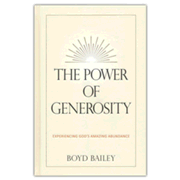
The Power of Generosity: Experiencing God’s Amazing Abundance
By Boyd Bailey Discover how generosity transforms your heart and life. Boyd Bailey guides readers to understand God’s abundance and how to reflect His generosity in everyday living. Rooted in Scripture, this book offers practical insights for trusting God’s provision and living faithfully as stewards of all He entrusts to us. |