

When I first started serious Bible study, I often felt lost. I knew the Scriptures held so much wisdom, but I didn’t know how to find the verses I wanted or explore the themes I cared about.
That all changed when I learned how to study the Bible with a concordance. Suddenly, I could trace words like “faith” or “grace” through Scripture. I discovered patterns, connections, and insights I had never noticed before. Using a concordance gave me confidence that I was studying God’s Word carefully, not just skimming it.
If you’re new to Bible study tools, I recommend starting with our Ultimate Guide to Bible Study Tools and Apps, which introduces the essentials before diving deeper with a concordance.
In this post, I want to show you how to use a concordance for Bible study in a practical, step-by-step way. Whether you have a printed concordance on your shelf or a Strong’s tool in an app, this guide will help you go deeper into God’s Word without feeling overwhelmed.
Let’s dive in and learn how to find Bible verses with a concordance and make them meaningful for your daily study.
Using a concordance is a practical way to study the Bible with depth. Start by choosing a key word, look it up, read verses in context, and observe patterns. Strong’s Concordance links English words to the original Hebrew or Greek for deeper insight, but context is always key. Avoid isolating verses or forcing meanings, and pair your study with prayer and reflection. Even small daily sessions, like tracing a word through Scripture, help you grow in understanding and make your Bible study more focused, meaningful, and sustainable.
What Is a Concordance?

A concordance is a special Bible study tool that lists words alphabetically and shows where each word appears in Scripture.
Think of it as a roadmap to God’s Word. Instead of searching blindly or relying on memory, you can look up a key word and quickly see every verse that contains it. This makes it easier to study topics, follow themes, or compare passages.
There are different types of concordances. Some are tied to specific translations, like the King James Version, while others, like Strong’s Concordance, connect English words to the original Hebrew or Greek.
Unlike simple search functions in Bible apps, a concordance encourages careful observation. It trains you to notice patterns and context, helping you study the Bible with depth and accuracy.
Why Use a Concordance for Bible Study
When I first opened a concordance, I realized how much it could change the way I read the Bible. Instead of flipping randomly or trying to remember where a verse was, I could look up a word. Instantly, I found every passage that mentioned it. Using a concordance for Bible study helps you see how God’s Word connects across different books, themes, and contexts.
It also trains you to pay attention to patterns. For example, tracing the word “faith” shows you not only what it means in one verse but how it grows and develops throughout Scripture. This gives a bigger picture of God’s message and guidance.
A concordance isn’t just a tool for pastors or scholars. Anyone can use it to study the Bible more deeply. Whether you’re preparing for personal devotion or teaching, a concordance helps you find Bible verses efficiently and accurately, making your study time more meaningful and focused.
For additional guidance on context and interpretation, see our post on Hermeneutics 101: How to Read and Interpret the Bible Correctly.
Choosing the Right Concordance Before You Study
Before you start using a concordance, it’s important to choose one that fits your study style. There are two main options: print and digital.
A print concordance gives you a tactile experience and can help you slow down and notice patterns more carefully. Digital concordances, on the other hand, are fast and searchable, which makes finding Bible verses using concordances much quicker. Both are effective; it just depends on what works best for you.
Translation matters as well. Most concordances are tied to a specific Bible version. For example, the classic Strong’s Concordance works with the King James Version. This is important because the words you look up must match the translation you are using. Some digital tools also link Strong’s numbers directly to modern translations, making it even easier to study the Bible with a concordance.
You can even combine approaches. Use an app for quick searches, then consult a print concordance to explore the context more deeply. Choosing the right tool from the start will save time and help you study confidently.
How to Find Bible Verses with a Concordance (Step-by-Step)

Using a concordance is easier than it looks, and once you try it, you’ll see how it can transform your Bible study.
Here’s a step-by-step guide that will help you find Bible verses with a concordance and study them effectively.
Step 1: Choose a Key Word
Start with a word that interests you or is relevant to your current study. For example, let’s use “faith.” Choosing one word at a time keeps your study focused and prevents overwhelm.
Step 2: Look It Up in the Concordance
Open your concordance to the word “faith.” You’ll find a list of verses where this word appears. If you’re using Strong’s Concordance, each verse is linked to the original Hebrew or Greek word, giving you even more insight.
Step 3: Read Each Verse in Context
Don’t just read the isolated line. Open your Bible and read the surrounding verses or chapter. This ensures you understand the passage as God intended and avoids misinterpretation.
Step 4: Observe Patterns and Themes
As you go through each verse, notice how “faith” is used in different contexts. Is it about trust, action, or belief? Are there repeated instructions or promises connected to it? Observing these patterns helps you see God’s message across Scripture.
Step 5: Write Simple Notes
Jot down your observations in a notebook or Bible app. Highlight key insights, cross-references, or questions for further study. This simple habit turns a list of verses into a meaningful study session.
By following these steps, you’ll quickly realize that finding Bible verses using concordances is not intimidating at all. It’s practical, hands-on, and rewarding. Within a single study session, you can trace a word through Scripture, discover new insights, and grow in understanding and faith.
Using Strong’s Concordance Effectively
Strong’s Concordance is one of the most popular tools for studying the Bible with a concordance, but it’s important to use it wisely.
Each word in the English Bible is assigned a Strong’s number that corresponds to its original Hebrew or Greek word. This allows you to trace the meaning of one word across multiple verses and see how it is translated in different contexts.
For example, the word “faith” in the New Testament is linked to different Greek words depending on context. By following the Strong’s numbers, you can find every verse that uses that original word, helping you understand its range of meaning.
However, it’s important to use Strong’s with care. The original word’s meaning does not automatically dictate your interpretation. Context, grammar, and Scripture as a whole must guide your understanding. Avoid assuming that a single nuance applies the same way in every verse.
Used correctly, Strong’s Concordance can deepen your study and reveal insights that might be missed in casual reading. It builds both confidence and theological maturity, helping you study the Bible with accuracy while keeping your heart humble before God’s Word.
Practical Examples of Concordance Use
Let’s look at a couple of simple examples to see how a concordance brings Scripture to life.
Example 1: Tracing a Word Across Books
Suppose you want to study “grace.” Using a concordance, you can locate every verse that mentions grace throughout both the Old and New Testaments. You might notice how God’s grace is shown differently in the Psalms compared to the letters of Paul. This reveals patterns and connections you might not catch by reading verses randomly.
Example 2: Seeing How Context Shapes Meaning
Take the word “love.” A concordance shows where it appears in various contexts. Sometimes describing God’s love, sometimes human love, and sometimes commands to love others.
By reading each verse in context, you see how meaning shifts with circumstances, helping you apply Scripture more wisely.
These examples show that using a concordance is not about memorizing verses. It’s about observing, connecting, and letting God’s Word speak for itself.
Common Mistakes to Avoid When Using a Concordance

While using a concordance is very helpful, there are a few common pitfalls to watch for.
1️⃣ Isolating Verses
Looking at a verse on its own can lead to misunderstanding, so always read the surrounding passages to see the full context.
2️⃣ Forcing Meanings
Just because a word appears in one place doesn’t mean it carries the same nuance everywhere. Let Scripture guide your understanding, and don’t impose ideas that aren’t supported by the text.
3️⃣ Treating a Word Study as the Final Authority
A concordance is a tool to help you explore God’s Word, not a substitute for prayerful reading, context, or the guidance of the Holy Spirit.
By keeping these cautions in mind, you can use a concordance with confidence, study more accurately, and grow in both understanding and humility.
How to Integrate Concordance Study into Daily Bible Time
To make concordance study a lasting habit, start with a simple routine. Begin with prayer, then read your passage and pick one or two key words to explore. Look them up in your concordance and note your observations.
Flexibility is key. Some days you may focus on one word, other days on a theme. The goal isn’t speed but depth.
Always pair your study with prayer and reflection. Ask God to guide your understanding and to help you apply what you learn.
By approaching your study this way, using a concordance becomes sustainable, enriching, and deeply rewarding.
Putting Your Concordance Study into Practice
Using a concordance is one of the most practical ways to study the Bible with depth and focus. It helps you find Bible verses, trace themes across Scripture, and understand how words are used in different contexts.
Whether you’re exploring a familiar word like “faith” or discovering new insights in “grace,” a concordance trains you to observe carefully and study intentionally.
Remember, the goal isn’t to become an expert overnight. It’s about letting God’s Word speak clearly and building a consistent habit of study that brings growth, understanding, and closer fellowship with Him.
Key Takeaways
- A concordance is a roadmap to find and explore words in Scripture.
- Always read verses in context; avoid isolating passages.
- Strong’s Concordance connects English words to original Hebrew and Greek for deeper insight, but context matters more than any single word.
- Use your concordance alongside prayer and reflection to make study meaningful and sustainable.
Call to Action
Start small today. Pick one word from your daily reading and look it up in your concordance. Observe how it’s used across Scripture, jot down your insights, and let God guide your reflection.
This post contains affiliate links, which means I may earn a commission at no extra cost to you if you make a purchase through one of these links. I only recommend products or services I trust and personally use. Thank you for supporting Biblical Christianity!
Top Recommended Bible Concordances
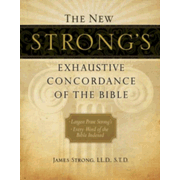
1️⃣ The New Strong’s Exhaustive Concordance of the Bible, Large-Print Edition
This helps you study the KJV in depth. Find every word with ease, explore themes across Scripture, and access updated Greek and Hebrew references for deeper Bible study.
|
The New Strong’s Exhaustive Concordance of the Bible, Large-Print Edition
Easy-on-the-eyes exegesis and squint-free Bible study! Find—and see—every occurrence of every word in the KJV. The enlarged type includes updated Greek and Hebrew dictionaries, words of Christ in bold, and a handy Fan-Tab thumb index. 1941 pages, hardcover. |
2️⃣ Cruden’s Complete Concordance to the Old and New Testaments by Alexander Cruden
A highly respected traditional concordance that organizes key biblical terms alphabetically with clear references. A great option for readers who want a concordance that’s useful for general Bible study and word‑tracking across both testaments.
3️⃣ Nelson’s Compact Series: Compact Bible Concordance by James Strong
A smaller, more affordable concordance that’s good for beginners or casual Bible students. It’s not as exhaustive as Strong’s but still helpful for finding key Bible verses using a concordance.