

I remember seasons when I wanted to understand God’s Word deeply, but I did not know how. I would read faithfully, pray sincerely, and still walk away with unanswered questions. Some passages felt unclear. Others felt overwhelming. I wondered if I was missing something or not mature enough in my faith to understand Scripture the way others seemed to.
Over time, I learned that my desire was right, but my approach needed guidance. The Bible was never meant to be read like an ordinary book. It was written across centuries, cultures, and languages. While the Holy Spirit is our ultimate Teacher, God has also provided tools to help us study His Word carefully and faithfully.
Bible study tools and apps do not replace Scripture, prayer, or dependence on God. They support them. They help us slow down, examine context, compare passages, and grow in understanding, especially when we feel stuck or unsure where to begin.
If you have ever struggled to understand the Bible or felt unsure which resources are worth using, this guide is for you. By the end, you will have a clear roadmap to choose, use, and benefit from Bible study tools at every stage of your spiritual journey.
What Are Bible Study Tools?
Bible study tools are resources designed to help us understand Scripture more clearly and accurately. They serve as guides to explore God’s Word with depth and wisdom.
They help answer questions like:
- Who was this written to?
- What does this word mean in its original language?
- How does this passage connect to the rest of the Bible?
When we read the Bible, we are engaging with God’s Word. When we study the Bible, we are learning how to handle it carefully and responsibly.
“Be diligent to present yourself approved to God, a worker who does not need to be ashamed, rightly dividing the word of truth.” — 2 Timothy 2:15 (NKJV)
Bible study tools help bridge that gap. These tools can include simple resources like cross-references, concordances, and study notes. They can also include more advanced tools such as digital commentaries, Bible study apps, and full Bible study software.
The goal is not to collect as many tools as possible. The goal is to use the right tools to support faithful interpretation and deeper understanding. With the right tools, even difficult passages become accessible, and Scripture comes alive in ways that inspire and transform your life.
Bible Study Tools vs. Bible Study Apps

Bible study tools can exist in both physical and digital forms. Bible study apps are one modern way these tools are delivered. They bring the functionality of multiple traditional tools into a single, portable platform.
Apps allow believers to study Scripture anytime and anywhere. They often include Bible translations, cross references, commentaries, reading plans, and note-taking features in one place.
“This Book of the Law shall not depart from your mouth, but you shall meditate in it day and night.” — Joshua 1:8 (NKJV)
Bible study apps make regular engagement with Scripture more accessible, especially for busy seasons of life. They can serve as daily companions, helping you track reading progress, highlight verses, and even memorize Scripture.
However, apps are most effective when used intentionally and prayerfully, rather than as a passive reading tool.
Best Bible Study Apps for 2026
Choosing a Bible study app can feel overwhelming because of the number of options available. With so many apps, it is easy to get distracted by features that may not help your spiritual growth. The key is to focus on apps that enhance understanding, support consistent study, and provide reliable theological guidance.
“Your word is a lamp to my feet and a light to my path.” — Psalm 119:105 (NKJV)
What to Look for in a Bible Study App
When selecting a Bible study app, consider features that help you engage with Scripture effectively:
- Multiple Bible translations: Compare versions to better understand nuances in wording.
- Cross references and parallel passages: Easily find related verses across the Bible to see the broader context.
- Notes and highlighting: Mark important insights and record reflections for future reference.
- Offline access: Study anywhere, even without an internet connection.
- Reading plans and devotionals: Guide your daily study and keep your practice consistent.
- Trusted theological resources: Access reliable commentaries, dictionaries, and original language tools to avoid misunderstandings.
- Search functions: Quickly locate verses, topics, or keywords to make study efficient.
Popular Apps and Their Strengths
- YouVersion: Excellent for daily devotionals, reading plans, and multiple translations. Features include verse sharing, highlighting, and personalized reading plans.
- Blue Letter Bible: Ideal for in-depth study, original language tools, and free commentaries. It also allows word searches in Greek and Hebrew.
- Bible Gateway: Offers a wide range of translations, audio Bibles, and searchable commentaries. Useful for sermon prep and personal study.
- Logos Mobile App: Perfect for advanced students, pastors, and teachers. Integrates commentaries, dictionaries, and original language tools for research.
- Olive Tree: Combines study resources with personal note organization in a clean interface. Great for tracking notes across multiple devices.
Using an app consistently can transform your Bible reading. You begin to notice connections, understand difficult passages more clearly, and grow confident in applying Scripture to your life. A small daily habit, ten minutes with the right app, can lead to remarkable growth over time.
Using Bible Study Software: Features to Look For

Bible study software goes beyond mobile apps by offering more advanced tools, often designed for deeper research, teaching, and sermon preparation.
“Consider what I say, and may the Lord give you understanding in all things.” — 2 Timothy 2:7 (NKJV)
Key Features to Consider
- Original language tools: Study Hebrew, Greek, or Aramaic words to grasp precise meaning and subtle nuances.
- Advanced search functions: Quickly locate passages, topics, or themes.
- Integrated commentaries and dictionaries: Access multiple trusted resources without switching platforms.
- Cross-reference systems: Understand connections between passages for deeper insight.
- Custom note organization: Keep your study notes structured for easy review and reflection.
- Study templates and guides: Some software includes pre-built guides for sermon prep, teaching, or in-depth study projects.
Example: If you are studying John 1:1, software like Logos allows you to see the Greek word “Logos,” its definitions, cross-references in the Septuagint, and commentaries all in one interface.
Bible study software is particularly helpful for pastors, teachers, and serious students of Scripture. Beginners can also benefit from simplified versions as they grow in confidence and knowledge. Using these tools strategically saves time and allows for a richer, more accurate understanding of the Word.
Reviewing Digital Commentaries for Bible Study
A Bible commentary provides explanation, historical background, and theological insight into Scripture.
“For Ezra had prepared his heart to seek the Law of the Lord, and to do it, and to teach statutes and ordinances in Israel.” — Ezra 7:10 (NKJV)
Digital commentaries allow readers to quickly search for passages and compare interpretations across trusted scholars. They are especially helpful when tackling challenging texts or understanding cultural context.
How to Choose a Sound Commentary
- Faithfulness to Scripture: Ensure the commentary does not distort or override biblical teaching.
- Clear explanation without speculation: Look for straightforward, applicable insights.
- Respect for historical and literary context: Helps you understand cultural background and author intent.
- Doctrinal alignment with biblical Christianity: Avoid sources that contradict core teachings of the faith.
Example: Studying Romans 12 with a digital commentary can reveal the Greek meaning of “renewing your mind,” highlight cross-references, and provide notes on first-century Roman culture.
Digital commentaries provide the advantages of accessibility and searchability. You can quickly access multiple perspectives, locate relevant passages, and cross-reference insights with other study tools.
How to Build a Personal Digital Bible Library
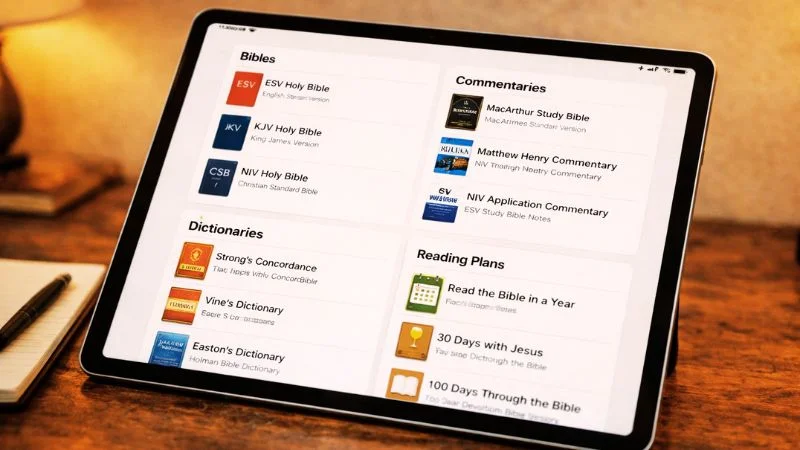
A digital Bible library is a curated collection of study resources you regularly use.
“Wisdom is the principal thing; therefore, get wisdom. And in all your getting, get understanding.” — Proverbs 4:7 (NKJV)
Core Resources to Include:
- A primary Bible translation for consistent reading
- One or two trusted commentaries for reliable guidance
- A Bible dictionary for context and word meaning
- A concordance or cross-reference tool to track themes
- Reading plans, devotionals, or study guides to maintain structure
Tips for Building Your Library:
- Begin with a few essential resources and expand gradually
- Focus on usability and reliability, not just quantity
- Include both free and paid resources wisely
- Organize your library to mirror your study routine
Example Setup:
- Bible: ESV or NKJV
- Commentary: MacArthur Study Bible and NIV Application Commentary
- Dictionary: Holman Illustrated Bible Dictionary
- App: YouVersion or Olive Tree for daily reading and notes
Building a library provides long-term benefit, making your Bible study more consistent, thorough, and spiritually enriching.
Free and Paid Bible Study Tools: What Is Worth Using?
Many high-quality Bible study tools are available for free online. They are often sufficient for personal study and early learning.
“If any of you lacks wisdom, let him ask of God, who gives to all liberally.” — James 1:5 (NKJV)
Paid tools are helpful when a deeper study is needed, especially for teaching, writing, or long-term study goals. Prayerful discernment will guide your investment and help you focus on tools that truly enhance understanding without overwhelming you.
Tip: Start with free tools and add paid resources gradually. Over time, you can develop a balanced, personalized library suited to your study level.
How to Use Bible Study Tools Wisely
Bible study tools should always serve Scripture, not overshadow it.
“Open my eyes, that I may see wondrous things from Your law.” — Psalm 119:18 (NKJV)
- Start with prayer.
- Read the passage carefully.
- Use tools to clarify meaning, context, and connections.
- Return to Scripture as your ultimate authority.
- Study consistently and allow God to guide your understanding.
- Reflect regularly on how what you learn applies to your life.
Example: When studying Psalm 23, use cross references to compare David’s language in other Psalms, check commentary notes for historical context, and highlight verses that resonate personally.
This approach makes your study practical, memorable, and spiritually transformative.
Conclusion: Choosing the Right Tools for Your Bible Study Journey
Bible study tools and apps can be a great blessing when used wisely. They help believers grow in understanding, confidence, and faithfulness to God’s Word.
Start simple. Choose one or two tools that fit your current season of life. Remain consistent, prayerful, and grounded in Scripture.
God honors those who seek Him through His Word.
“But grow in the grace and knowledge of our Lord and Savior Jesus Christ.” — 2 Peter 3:18 (NKJV)
📌 Coming Up in Our Bible Study Tools Series
This guide is part of our growing Bible Study Tools series.
Coming up next, we will cover how to use concordances for deeper Bible study, the role of Bible dictionaries in understanding Scripture, and how to choose trusted digital commentaries. Each post is designed to help you study God’s Word carefully and faithfully.
Be sure to follow along as this series continues.
This article is a wonderful resource!
Thank you, Laura. May the Lord bless and guide you as you delve deeper into His Word.
As you study, may you find wisdom and insight that illuminate your path and strengthen your faith.
Also, keep your heart open, for the Lord has wonderful plans for you as you continue to seek Him.
Shalom!