

Updated: February 2026
This post contains affiliate links, which means I may earn a commission at no extra cost to you if you make a purchase through one of these links. I only recommend products or services I trust and personally use. Thank you for supporting Biblical Christianity!
Why Does Bible Study Really Matter?
Many Christians own a Bible.
Many read it occasionally.
But far fewer intentionally study it.
Life is busy. Distractions are everywhere. And for many believers, Bible study can feel overwhelming, confusing, or even intimidating. Some wonder if listening to sermons or devotionals is enough. Others assume Bible study is only for pastors, theologians, or “serious” Christians.
So, the question remains:
Why read and study the Bible?
Why does it matter?
The most important reason is this: God is the Author.
God Is the Author of Scripture
Christians should know and study the Bible for many reasons, but the primary one is because God Himself is the Author.
We know God as:
Creator (Genesis 1:1)
Judge (Genesis 18:25)
Redeemer (Isaiah 60:16)
But do we often think of Him as the Author?
Human authors convince us it is vital to read their books. Yet it is far more important to read God’s book, the Bible. Scripture is not merely a religious text. It is God’s revealed Word to humanity.
The Bible Is God-Breathed and Authoritative

Second Timothy 3:16–17 teaches that all Scripture is inspired by God and useful for teaching, correction, and training in righteousness so that believers may be fully equipped for every good work. This means the Bible is not merely helpful advice or spiritual literature; it carries divine authority.
People often debate what it means for the Bible to be inspired. Some suggest that only certain parts are inspired, while others believe the Bible contains God’s Word but is not entirely God’s Word. Scripture itself affirms otherwise.
The apostle Paul taught that all Scripture is God-breathed, not just selected passages. Peter likewise explained that prophecy did not originate from human will, but from men who spoke as they were carried along by the Holy Spirit (2 Peter 1:21).
God did not simply inspire ideas and leave the wording to human authors. Through the work of the Holy Spirit, God inspired the very words written in Scripture. This is what makes the Bible unique. It is a book where divine truth was communicated through human writers without compromising God’s message.
Because Scripture comes from God, it deserves careful reading and intentional study.
Recommended Resource
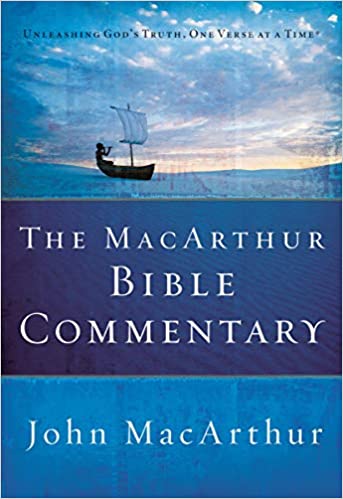
For readers who want to study God’s Word thoroughly, the MacArthur Bible Commentary provides verse-by-verse insight into every passage of the Old and New Testaments, helping believers understand and apply Scripture accurately.
|
The MacArthur Bible Commentary
By John MacArthur Comprehensive one-volume commentary covering every passage of the Old and New Testaments. Perfect for studying God’s Word deeply and understanding Scripture verse by verse. Rooted in sound biblical teaching, this resource equips readers to grow in faith, discern truth, and apply God’s Word in daily life. |
Whether you’re a beginner or a seasoned student of the Bible, this commentary equips you to grow in knowledge, discernment, and faith.
The Need to Study the Bible
Why should Christians study the Bible?
Recently, I had a conversation with a close relative about eschatology, the study of future events. That discussion served as a reminder of why studying the Bible matters, not only in specific areas of doctrine but across the whole of Scripture, from broad themes down to individual verses.
Studying the Bible helps us understand what Scripture actually teaches. It shapes our beliefs, clarifies doctrine, and guards us against misunderstanding.
How well do we truly know the teachings of the Bible?
1️⃣ To Identify False Doctrine
One major reason to study the Bible is to recognize and correct false teaching.
Jesus warned about false teachers who appear harmless but lead people astray (Matthew 7:15). In fact, warnings against false doctrine appear repeatedly throughout the New Testament. Many people fall into deception not because they reject the Bible, but because they do not know it well enough.
False teachers often quote Scripture while twisting its meaning. The enemy himself used Scripture when tempting Jesus (Matthew 4:1–11). Jesus did not respond with personal opinion. He responded with God’s Word, rightly understood and properly applied.
We can only test teaching and “fact-check” spiritual claims if we know Scripture. Discernment is not solely the responsibility of pastors or church leaders. Every believer is called to examine truth in light of God’s Word.
When presented with questionable teaching, are we able to respond biblically?
2️⃣ To Live in Righteousness
Studying the Bible is essential for shaping how we live.
When we come to faith in Christ, the Holy Spirit begins the work of transforming our hearts and minds. Yet sanctification is an ongoing process. As believers, we are continually being shaped away from sinful desires and toward righteousness.
The study of eschatology offers a clear example. Understanding that Christ may return at any time should influence how we live today. Scripture calls believers to pursue purity, self-control, and godliness as we wait for the blessed hope of Christ’s return (1 John 3:3; Titus 2:11–13).
Bible study is not merely academic. It confronts our priorities, exposes areas of compromise, and calls us to live in a way that honors God. One day, every believer will stand before God and give an account of their life. Are we living with that reality in mind?
3️⃣ To Grow and Mature Spiritually
God did not save us only to forgive our sins. He desires that we grow and mature in our faith (John 3:16; 2 Peter 3:18). Spiritual growth, however, does not happen instantly or automatically.
Just as physical growth requires nourishment, spiritual growth requires feeding on God’s Word (Matthew 4:4). Without regular exposure to Scripture, spiritual maturity cannot develop. Bible study deepens our understanding of God’s character, strengthens our faith, and shapes our spiritual discernment.
While prayer and fellowship are vital, they do not replace the need for Scripture. Growth in Christ is rooted in the Word of God.
4️⃣ To Be Equipped for Every Good Work
The Christian life involves more than personal devotion. Believers are also called to participate in God’s work in the world.
Every follower of Christ is commissioned to make disciples and share the message of the Gospel (Matthew 28:19–20). But an effective witness requires preparation. Knowing Scripture enables believers to explain truth clearly and confidently.
In the book of Acts, Peter proclaimed Christ by drawing from Old Testament prophecy. Philip helped the Ethiopian eunuch understand Isaiah’s message about the suffering Messiah. In both cases, Scripture was the foundation for faith.
Christians who study the Bible are better equipped to serve, teach, encourage, and share the Gospel faithfully. The question is not whether opportunities will arise, but whether we are prepared when they do.
Reading vs. Studying the Bible

There is an important difference between reading the Bible and studying it.
Reading helps us become familiar with Scripture. Studying helps us understand meaning, context, and application. Both are valuable, but study requires intentionality. It involves asking questions, observing patterns, and seeking to understand what the text meant to its original audience and how it applies today.
Studying the Bible does not require advanced education or expensive resources. It requires a willing heart, time, and dependence on the Holy Spirit.
Common Barriers to Bible Study
Many believers desire to study the Bible but struggle to remain consistent. Common obstacles include a lack of time, uncertainty about where to begin, and fear of misunderstanding Scripture.
These challenges are real. Yet God does not call us to perfection, but faithfulness. Bible study does not have to be complicated to be meaningful. Small, consistent steps can lead to lasting spiritual growth.
For clear methods on approaching the text with context and purpose, check out my beginner’s hermeneutics guide.
Key Takeaway
Studying the Bible is not optional for spiritual maturity.
It is essential.
Because God is the Author of Scripture, His Word carries authority, truth, and life-changing power. Through Bible study, believers grow in discernment, pursue righteousness, mature spiritually, and become equipped to serve God faithfully.
Conclusion: A Call to Stay Rooted in the Word
Scripture reveals God’s character, His redemptive plan, and our purpose as believers. While we may not understand every detail of God’s plan, the Bible provides everything necessary to know Him, trust Him, and live in obedience to Him.
Studying the Bible teaches us how to live in a way that pleases God and prepares us for every good work. Growth takes time. Understanding develops gradually. But God honors those who seek Him through His Word.
Are you spending time in the Word?
What’s Coming Next
In upcoming posts, we will explore:
Essential Bible study tools for beginners and seasoned believers
Practical Bible study methods and techniques
How to develop a consistent and sustainable Bible study habit
If you want to grow in your understanding of Scripture, these resources will help you take the next step.
Stay rooted in God’s Word.