
In my article, “Science and Faith: Can They Truly Coexist in Harmony?,” I asked whether science and Christian faith are fundamentally at odds. I landed on a simple answer: they’re not. Science and faith address overlapping but different dimensions of reality. You don’t have to choose between believing in God and trusting the scientific method.
A recent conversation in the comments on that article brought this question into sharper focus. Peter Joseph suggested that science itself rests on assumptions about the physical world, much like economics rests on assumptions about human behavior. His comment raised an important question worth exploring: Is materialism actually the foundation of science?
It’s an important question because this is where many of these conversations get confused.
Science studies the natural world. Scientists look for natural explanations. Every instrument in a lab, from a microscope to a particle detector, measures physical phenomena. So, doesn’t that mean science has already assumed, from the very start, that nothing beyond matter exists?
That’s a much bigger claim than it sounds like. Answering it means untangling two ideas that often get treated as one: doing science and making philosophical claims about the nature of reality. Those aren’t the same thing. Confusing them is where this whole debate goes sideways.
Key Takeaway
Science operates by methodological naturalism, a working rule for investigating natural causes. Philosophical materialism makes a much larger claim: that physical reality is all that exists. These ideas are often treated as identical, but they are not.
What Is Science Actually Designed to Investigate?

Let’s start simple. Science investigates the natural world through observation, measurement, experimentation, testing, prediction, and reproducible evidence.
It asks questions like:
- What causes this physical phenomenon?
- How does this system behave?
- What patterns can we observe?
- Can this explanation be tested?
- Can the results be verified independently?
That’s a tremendous strength. It’s also why science has given us vaccines, bridges, smartphones, and a working understanding of the cosmos.
But strength comes with scope. A method built to investigate measurable natural phenomena isn’t automatically equipped to answer every question about reality. That’s not a criticism of science; it’s just what the tool is for.
Here’s a principle worth holding onto for the rest of this article: a limitation of a method is not a limitation of reality itself. A hammer is a great tool. It’s just not designed to measure temperature. That doesn’t mean temperature isn’t real.
What Is Methodological Naturalism?
This term gets thrown around a lot, and it’s often confused with atheism. It shouldn’t be.
Methodological naturalism is a rule about how to do science, not a claim about what ultimately exists. It says that when researchers investigate the natural world, they look for explanations involving natural processes, things that can be observed, tested, and measured.
Say a plant is growing in your backyard. Science investigates that growth by looking at sunlight, water, nutrients, photosynthesis, genetics, and environmental conditions. It doesn’t insert “God directly willed this leaf to unfurl” into the lab notebook as a variable.
That’s methodological naturalism at work. It’s a practical constraint on how the experiment is run.
But here’s the key move: none of that means scientists have proven God doesn’t exist. “Science investigates natural causes” is a statement about method. “Natural causes are the only things that exist” is a statement about ultimate reality. The first doesn’t logically become the second, no matter how many times it’s repeated.
What Is Philosophical Materialism?
Now for the other half of the confusion.
Materialism, often discussed today under the broader term physicalism, makes a much bigger claim than methodological naturalism does. It holds that physical reality is fundamental, and that everything that exists is ultimately physical, or reducible to physical processes.
That’s not a scientific method anymore; it’s a worldview. A metaphysical claim about the furniture of reality itself.
The difference is easier to see side by side:
| Question | Methodological Naturalism | Philosophical Materialism |
|---|---|---|
| What does it do? | Guides scientific investigation | Describes ultimate reality |
| Scope | Methodological | Metaphysical |
| Uses natural explanations? | Yes | Ultimately, yes |
| Claims only matter exists? | Not necessarily | Essentially, yes |
| Is it itself a scientific finding? | No | No |
That last row matters more than it looks. Neither proposition is itself the result of a scientific experiment. One is a working method for doing science. The other is a philosophical position that goes well beyond what any experiment can establish.
Are Methodological Naturalism and Materialism the Same Thing?
No. And this is worth stating plainly, because the two get blended together constantly.
A scientist can say, “For this experiment, I will investigate natural causes,” without also saying, “Natural causes are all that exist.” Those are two different sentences making two different kinds of claims.
Think of it like a detective working on a crime scene. The detective looks for physical evidence: fingerprints, fibers, footage, DNA. That’s the job. It doesn’t mean the detective has concluded that nothing exists beyond fingerprints and fibers. The method simply determines what counts as admissible evidence for that particular investigation.
Methodological naturalism tells scientists how to conduct an investigation. Philosophical materialism tells you what ultimately exists. One is a set of working rules. The other is a conclusion about the universe. Treating them as interchangeable is where a lot of “science vs. Faith” arguments quietly go wrong.
When Scientific Findings Become Philosophical Claims
Here’s where a lot of the confusion in this whole debate actually originates. Science discovers something true about the natural world. Then, often without anyone noticing the shift, someone adds a philosophical conclusion on top of it that the evidence itself doesn’t require.
For example:
Scientific finding: The brain is deeply involved in human thought and consciousness. Philosophical leap: Therefore, consciousness is nothing more than matter.
Or:
Scientific finding: Many biological processes can be explained through natural mechanisms. Philosophical leap: Therefore, there is no Creator.
In both cases, the second statement doesn’t automatically follow from the first. The problem isn’t the science. The science is solid. The problem is quietly smuggling in a philosophical conclusion and presenting it as though the data itself proved it.
What Is a Category Error?
Before going further, it helps to name a concept you’ll see show up again and again in these kinds of discussions: the category error.
A category error happens when you apply a question or a standard to something it was never built to address. “Science cannot detect God; therefore, God doesn’t exist” sounds scientific. It isn’t. It’s a philosophical inference drawn from the limits of a particular method, dressed up to look like a finding.
Here’s the same mistake in a different outfit: “Science explains how the universe developed; therefore, there’s no need for God.” Explaining a mechanism isn’t the same as eliminating the question of what caused the mechanism to exist, or why it exists at all, in the first place.
Keep that distinction in mind. We’ll see why it matters when we turn to consciousness and the question of God.
Can Science Investigate Consciousness Completely?
This is where things get genuinely interesting, and where I want to be careful not to overstate the case.
Science has told us an enormous amount about the brain. Neural activity, brain structures, chemical processes, electrical signals, behavior, cognitive function, and the effects of injury on personality and memory. This is real, well-documented, and valuable research.
But there’s a deeper question sitting underneath all of it. Does describing the physical processes associated with consciousness fully explain consciousness itself?
Philosophers call this the “hard problem of consciousness.” The issue isn’t whether brain activity is real. Of course it is. The question is whether a complete map of neural firing patterns necessarily explains what it’s like to experience something from the inside. Why does physical processing produce an inner experience of pain, color, beauty, love, awareness, or a sense of self at all?
I’m not going to claim science can never make progress here. That would be overreaching in another direction. But I will make a more modest, more defensible point: the fact that these questions remain genuinely open shows that describing physical mechanisms and explaining subjective experience are not automatically the same task. That gap is worth sitting with honestly, rather than papering over it in either direction.
Can Science Prove That God Does Not Exist?
No. Not simply by using the scientific method.
“God does not exist” isn’t a testable hypothesis about a measurable phenomenon. It’s a metaphysical claim, and God isn’t a physical object you can place in a lab and test the way you’d test a chemical reaction. Science can investigate specific claims about God’s actions in the world when those actions produce testable consequences. But that’s different from testing for His existence directly.
This is the same category error from before, applied directly to God: a method’s inability to detect something isn’t evidence that the thing is unreal.
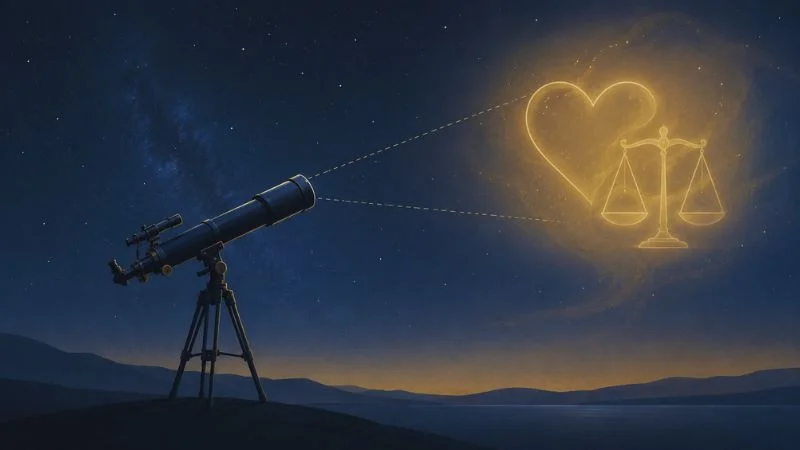
A microscope can’t detect justice. A thermometer can’t measure love. A telescope can’t locate a mathematical truth sitting out in space somewhere. None of that means justice, love, or mathematical truth are fake. It just means you’re using the wrong tool for that question. The same logic applies when someone claims science has ruled out God.
Can Science Itself Establish Materialism?
This brings us back to the central question of this article. Can materialism actually be demonstrated scientifically?
If materialism claims that only physical reality exists, what experiment could possibly establish that? A scientific experiment can investigate a specific physical phenomenon in a specific context. But how would an experiment prove that nothing nonphysical exists anywhere in reality, in any form, ever? That would require a kind of total knowledge that reaches far beyond the scope of any single physical investigation, or even all of them combined.
Laid out step by step, the reasoning looks like this: science investigates observable aspects of the natural world, using methodological naturalism as its working method. Materialism, by contrast, claims that physical reality is all that exists, full stop. That’s a claim that extends well past the methodological boundaries science operates within. Which means materialism can’t simply borrow the authority of science and call itself a scientific finding. It’s a philosophical position that has to be argued for on philosophical grounds, not assumed because science works.
To be clear, none of this proves Christianity is true. I want to say that plainly, because it would be overreaching to claim otherwise. What it does establish is more modest, but still significant: materialism requires its own philosophical justification. It doesn’t get to coast on the credibility of science.
Does This Mean Christians Should Reject Science?
Absolutely not. Science isn’t the enemy.
Christians have every reason to appreciate science, and historically have contributed enormously to it. Creation is orderly. The universe is intelligible in ways that invite investigation. Human beings can study God’s creation and learn real, true things about how it works.
Scientific discovery reveals staggering complexity, from the structure of a single cell to the scale of a galaxy. Medicine and technology, both products of scientific inquiry, serve human flourishing every single day.
The conflict only shows up when scientific methodology gets quietly upgraded into a worldview that claims matter is all there is. That’s not a conflict between science and faith. That’s a conflict between one particular philosophy and faith, and it’s worth naming the difference.
What Does Christianity Say About Reality?
So where does Scripture actually land on all this?
Christianity doesn’t teach that the physical world is somehow unreal or unimportant. Quite the opposite. “In the beginning, God created the heavens and the earth” (Genesis 1:1). Christianity doesn’t reject the physical world. It places the physical world in its proper relationship to its Creator.
But Christianity also teaches that physical reality isn’t the final word on what exists. “God is spirit” (John 4:24). And Hebrews reminds us that “by faith we understand that the universe was created by the word of God, so that what is seen was not made out of things which are visible” (Hebrews 11:3).
Paul goes even further in Colossians, writing that everything was created through Christ, and that “in him all things hold together” (Colossians 1:16–17). Creation isn’t just something God set in motion and walked away from. It’s actively held together by Him.
That gives Christianity a genuinely different starting point than materialism. Matter is real. Matter is good. But matter is not ultimate. God is.
Science Has a Scope. Reality Is Bigger Than a Method.

Let’s bring all of this together.
Science asks: how does the natural world work? Methodological naturalism answers: investigate natural causes while doing science. Materialism claims: only physical reality ultimately exists. Christianity responds: the physical universe exists because God created it, and God Himself is not reducible to His creation.
So, back to the title question. Is materialism actually the foundation of science? No. Science can operate successfully without assuming that matter is all that exists. Methodological naturalism is a feature of scientific practice. Philosophical materialism is a worldview built on top of it. Confusing the two turns a useful scientific method into a metaphysical conclusion that science itself never established.
Science is extraordinarily powerful at telling us how the natural world works. But it does not automatically become a philosophy of everything that exists. We should not ask science to prove what lies beyond its method. Nor should we give materialism scientific authority for a philosophical claim science cannot establish. Once we see that distinction clearly, the claim that “science disproves God” loses much of its force. Not because science has failed, but because it was never actually making that claim in the first place.
FAQ
Is materialism the same thing as science?
No. Science is a method for investigating the natural world. Materialism is a philosophical worldview claiming that only physical reality exists. Science can be practiced without assuming materialism is true.
It’s the working rule that scientific investigation looks for natural, testable explanations. It’s a method, not a claim that nothing beyond nature exists.
What is methodological naturalism?
Does methodological naturalism prove atheism?
No. Using natural explanations during a scientific experiment doesn’t logically lead to the conclusion that nothing supernatural exists. That’s a philosophical leap, not a scientific finding.
Can science prove God doesn’t exist?
No. “God does not exist” is a metaphysical claim, not a testable hypothesis about a measurable phenomenon. Science can examine specific claims about God’s action in the world, but it can’t test for God’s existence the way it tests a chemical reaction.
What is a category error, and why does it matter here?
A category error happens when you apply a question to something it was never designed to address, like expecting a microscope to detect justice. Many “science disproves God” arguments rest on this same mistake: assuming a method’s silence on something means that thing isn’t real.
Does this article prove Christianity is true?
No, and it isn’t meant to. It makes a narrower point: materialism cannot simply borrow the authority of science. That opens the door for a philosophical and theological case for God, but it isn’t a proof on its own.