

Last updated: March 2026
Understanding repentance in the Bible is essential because it is one of the core foundations of the Christian faith. Repentance is not just a concept; it is the key to a restored relationship with God and a transformed life.
The author of Hebrews reminds believers:
“So, let us stop going over the basic teachings about Christ again and again. Let us go on instead and become mature in our understanding. Surely, we don’t need to start again with the fundamental importance of repenting from evil deeds and placing our faith in God” (Hebrews 6:1 NLT).
This verse emphasizes that repentance is a foundational teaching. Every Christian must understand what it truly means to repent.
- Biblical repentance is a change of heart, mind, and actions toward sin.
- Godly sorrow leads to true repentance and salvation; worldly sorrow does not.
- True repentance results in behavioral change, not just emotion.
- Examples: Job, Isaiah, Peter, and the thief on the cross.
- False repentance (remorse without turning to God) leads to destruction (Judas).
- God calls all people to repent and obey Him (Luke 5:32; Luke 13:5).
Biblical Definition of Repentance
Many people ask, “What is repentance?” or search for the repent meaning in the Bible. While some define repentance as mere regret, Scripture reveals a far deeper reality.
In the New Testament, two Greek words are translated as “repent”:
- Metamelomai – refers to regret or sorrow for past actions. While it expresses remorse, it does not necessarily produce a change of heart or life.
- Metanoia – means a transformative change of mind, resulting in a complete shift of attitude and behavior. This is the biblical concept of repentance.
Key point: Biblical repentance is not simply feeling sorry for sin. It involves a change of mind, heart, and actions, turning away from sin and turning toward God.
When John the Baptist preached repentance, he called people to change their ways because the kingdom of God was at hand (Matthew 3:1-2). Jesus also emphasized repentance, saying that people must turn from their sins (Luke 13:3). In Acts 20:21, Paul defines repentance as “turning from sin and turning to God.”
The Nature of True Repentance
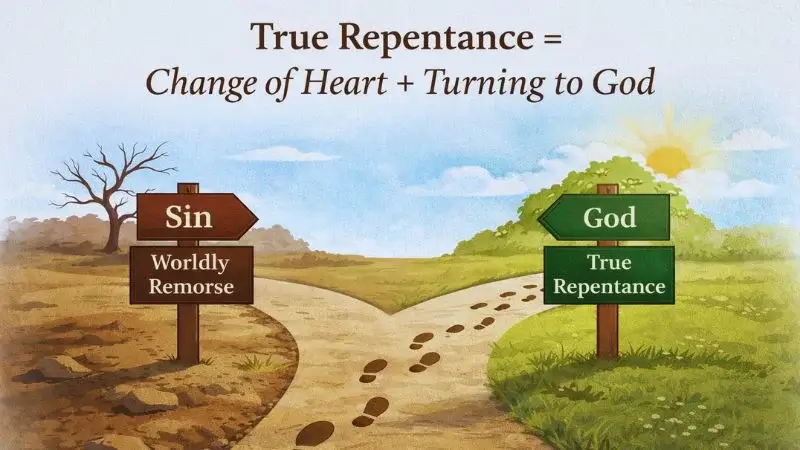
Repentance is not just sorrow or remorse. Feeling regret does not guarantee true repentance. Only godly sorrow produces the change that God desires. Paul explains this in 2 Corinthians 7:8-11:
“Even if I caused you sorrow by my letter, I do not regret it. Though I did regret it, I see that my letter hurt you, but only for a little while, yet now I am happy, not because you were made sorry, but because your sorrow led you to repentance… Godly sorrow brings repentance that leads to salvation and leaves no regret, but worldly sorrow brings death.”
Takeaway: True repentance flows from godly sorrow, not mere feelings of guilt. This sorrow leads to a turning away from sin and a turning to God, resulting in salvation and restored fellowship.
1️⃣ True Repentance Leads to Action
A change of heart must be accompanied by a change of behavior. Mere regret or remorse is not enough. Jesus illustrates this principle in the parable of the two sons:
“A man had two sons. He came to the first and said, ‘Son, go work in my vineyard today.’ He answered, ‘I will not,’ but afterward he regretted it and went” (Matthew 21:28-29).
Lesson: True repentance manifests in action. When we genuinely repent, we do more than feel sorry; we actively turn from sin and obey God.
2️⃣ Repentance Reveals Who We Really Are
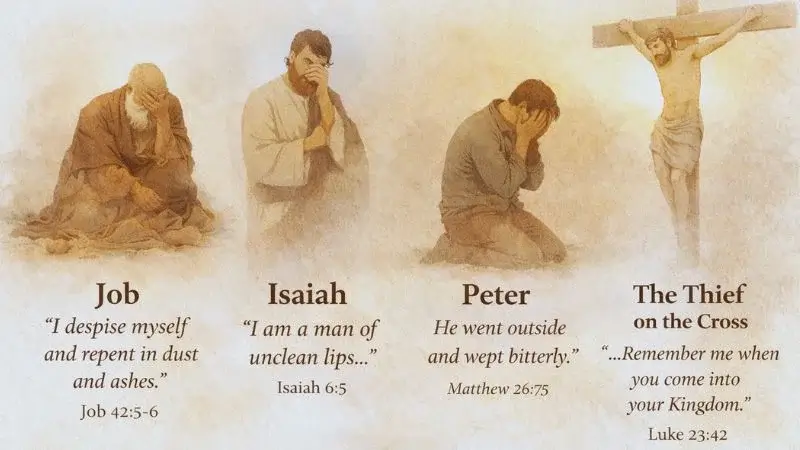
Repentance helps believers see themselves as they truly are before God. Several biblical examples illustrate this:
- Job: During his suffering, Job initially defended his innocence. But after encountering God, he acknowledged his smallness and sinfulness:
“My ears had heard of you, but now my eyes have seen you. Therefore, I despise myself and repent in dust and ashes” (Job 42:5-6).
- Isaiah: The prophet confronted God’s holiness and recognized his own sinfulness:
“Woe to me! I am ruined! For I am a man of unclean lips… and my eyes have seen the King, the Lord Almighty” (Isaiah 6:5 NIV).
- Peter: After witnessing Jesus’ power, Peter acknowledged his sinfulness:
“Depart from me, for I am a sinful man, O Lord” (Luke 5:8).
- The Thief on the Cross: He initially mocked Jesus but later turned to Him in repentance, asking to be remembered in God’s kingdom. Jesus promised:
“…Today you will be with me in paradise” (Luke 23:42-43).
Insight: Repentance is both a recognition of our sin and a turning toward God’s mercy and grace.
True Repentance vs. False Repentance
The Bible contrasts true repentance with mere remorse.
- Peter: Felt remorse, wept bitterly, and sought restoration (Matthew 26:73-75). He returned to fellowship and became a bold leader in the early church (Acts 2:38).
- Judas: Felt remorse for betraying Jesus but did not turn to God. Instead, he took his own life (Matthew 27:5; Acts 1:18-19).
Key lesson: True repentance produces a turning to God and a change in behavior. False repentance may feel emotional, but it does not restore fellowship or produce life transformation.
Results of True Repentance
1️⃣ Restoration with God: Peter’s repentance restored his relationship with God and fellow believers.
2️⃣ Forgiveness of sins: God forgives those who truly repent.
3️⃣ Transformation of life: Genuine repentance results in actions aligned with God’s commands.
4️⃣ Salvation: Repentance is inseparable from faith and salvation (Luke 5:32; Acts 2:38).
A Call to True Repentance
Biblical repentance is not just an emotion; it is a transformative change of mind, heart, and behavior. True repentance involves:
Recognizing sin and its offense against God.
Turning from sin and turning to God.
Asking for forgiveness and walking in obedience.
Demonstrating repentance through action and restored fellowship.
God calls everyone to repentance. The focus of Jesus’ ministry was to invite sinners to turn to God (Luke 5:32; Luke 13:5).
Have you responded to God’s call to repentance today?
This post contains affiliate links, which means I may earn a commission at no extra cost to you if you make a purchase through one of these links. I only recommend products or services I trust and personally use. Thank you for supporting Biblical Christianity!
Recommended Resource
Repentance: The First Word of the Gospel by Richard Owen Roberts
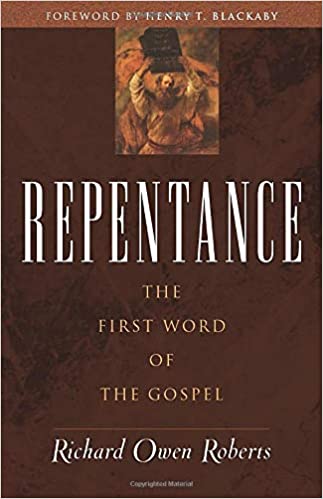
It is a serious problem when society misunderstands or disregards sin and repentance. But when the church neglects these doctrines, the impact is profound. This book unfolds the nature and necessity of biblical repentance, but for the church in particular.
Roberts’ in-depth study heavily references both the Old and New Testaments and includes chapters on the myths, maxims, marks, models, and motives of repentance, as well as the graces and fruits that accompany it. There is also a wise warning about the dangers of delayed repentance.
Hi Alice,
My name is Maia, and I just came across this website. I don’t have any sight. However, I can visualize things, especially when it comes to things related to my faith.
As a Christian, I strive to be the light in the face of darkness and create a positive difference in the face of evil through words of love, encouragement, and wisdom. I also enjoy singing, and I join a professional children’s choir.
Thank you for your words of wisdom. I think this message is important for all Christians to follow. One thing I would like to suggest is that we need to get out of the habit of telling others (especially children) ‘don’t do it again!’. The truth is, we can’t change by ourselves.
Repentance is a process. It’s not a goal of perfection. I myself can be a perfectionist when it comes to the notion of ‘committing a sin’ against others or God. For example, when children talk back to their parents or disobey those of authority, they have sinned against their parents AND God, hence the Fifth Commandment.
When we break a commandment or instruction, we sin. But, the problem is when parents say ‘don’t do it again!’ or ‘I don’t want to see you do this behavior again. The reason I don’t really approve of this statement is that we rely on our own ways to change rather than the source of repentance: Jesus Christ.
I am not saying that we should excuse sin, but we should be careful when we guide others when they do commit a sin. Christ is the one who died for our sins. The Holy Spirit is like a GPS. When you get lost in the middle of a road, the GPS does not say “Don’t go this direction again!” It gives new directions to get you back on track. Similarly, the Holy Spirit calls us to a path of righteousness and obedience to the truth. We should guide others by grace, with love, with the truth, and with hope.
Repentance is a 180° turn from the dark path. When we talk about repentance, let’s focus on the process, and not the product. What are you doing NOW to get the result of repentance? You first must change your mind about your sin. You must go from loving it to detesting it, just as God detests it. God is holy, and we should set a high expectation to walk in holiness.
The mind and the heart are the building blocks of our thoughts, words, and deeds. As Jesus said, the heart is what produces thoughts of righteousness, and evil desires and lusts.
To sum it up, repentance is a lust for what is right according to God’s standards.
I encourage all of you to get vaccinated for Covid-19 if you haven’t already. I understand that there are concerns regarding the effectiveness of vaccines, but I just want to uncover this worldwide deception that this is the ‘mark of the beast’ spoken of in Revelations 13. Satan is working to deceive the masses, and we must work to bring light in the shadows of confusion and misinformation.
Thank you, and may God protect you and your families during this season of testing! 🙂
Hello Maia,
Thank you so much for leaving such an insightful comment; I truly appreciate it.
You’re absolutely right! We can’t really change on our own; we need the grace of God to enable us. At the same time, when we get convicted by the Holy Spirit, we need to humble ourselves, acknowledge our faults, and confess.
Shalom!
Very helpful and instructive.
Glad to hear that, Tina.
And thanks for taking the time to read the article.